Imagine a high-stakes live concert. Thousands of fans are screaming. The band strikes the first chord, and suddenly, the main video wall drops to black. Panic sets in. In today's live production landscape, your visuals are the absolute heartbeat of the show. For event organizers, AV rental houses, and technical directors, equipment failure is simply not an option. Period.
Unfortunately, subpar screens fail all the time. They flicker terribly on camera. They short out during unexpected rainstorms. Or they require excessive hours to rig, draining your tight labor budget. The ultimate solution? Sourcing professional-grade visual technology engineered specifically for the brutal reality of touring. In this technical guide, we break down the exact hardware specs and physical features you need to guarantee a flawless visual experience on your next gig.
Let us look at where the industry is actually heading. Recent market data shows a massive surge in immersive experiential marketing and massive outdoor festivals. This shift has forced a hard pivot in AV standards. Production companies are rapidly abandoning legacy indoor panels for weather-agnostic, ultra-durable touring inventories. Furthermore, with the rise of live-streamed events and XR virtual production stages, the demand for ultra-high refresh rates and flawless camera performance has skyrocketed. If your gear cannot handle a sudden downpour or a 4K broadcast camera, it is already obsolete.
Before diving into the granular engineering specs, you must understand the baseline criteria that define a pro-grade event screen. Protect your capital investment by prioritizing these specific capabilities.
High Refresh Rates are Mandatory: A strict minimum of 3840Hz guarantees clean, flicker-free video recording and seamless live broadcasts.
Durability Protects Your ROI: Demand die-cast aluminum cabinets, reinforced edge protection, and true IP65 ratings for outdoor resilience.
Pixel Pitch Dictates Resolution: Base your pixel pitch entirely on the mathematical minimum viewing distance of your audience.
Operational Efficiency is Everything: Top-tier modular screens use fast-lock mechanisms and lightweight frames to drastically cut labor costs during load-in and load-out.
Supplier Reliability Matters: Partnering with a manufacturer that provides batch consistency and accessible technical support is just as critical as the hardware itself.
When planning a temporary live event, standard commercial screens are functionally useless. The fast-paced, physically demanding nature of the touring industry requires gear built for mobility and rapid deployment. Therefore, investing in a specialized Rental LED Display is the only viable path for serious AV companies.
Fixed screens are bolted to a wall or billboard and left untouched for years. Because they never move, they use heavy steel frames and complex, time-consuming wiring. That is completely impractical for a temporary stage. Conversely, a rental screen is built to survive a life on the road. These panels use lightweight alloys, integrated ergonomic handles, and modular designs. A small crew of stagehands can lock together a massive video wall in hours, not days.
A professional touring display rests on three engineering pillars. First is portability. The cabinets must pack efficiently into standardized flight cases to optimize truck space. Second is modularity. Precision engineering ensures that hundreds of panels connect seamlessly without visible gaps or dark lines. Finally, ruggedness is non-negotiable. The gear must survive midnight load-ins, fluctuating climates, and rough handling without suffering dead pixels.
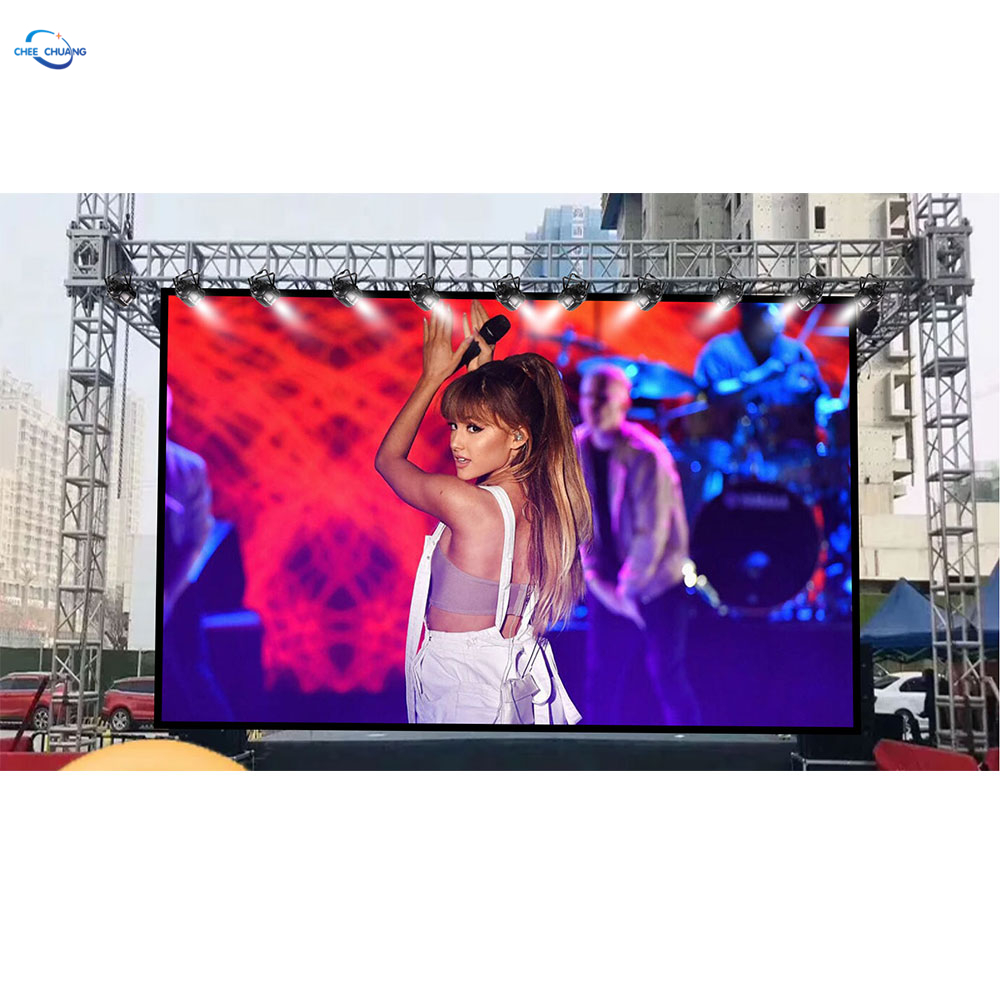
For AV engineers, electronic performance is the ultimate deciding factor. Resolution and brightness are obvious to the naked eye. However, the refresh rate dictates exactly how the screen interacts with professional cameras and thousands of audience smartphones.
Refresh rate is measured in Hertz. It refers to the number of times per second the screen hardware draws the incoming data. Standard commercial screens often operate at 1920Hz. That might look fine to the human eye, but it is a disaster for live events. Professional event screens strictly operate at 3840Hz. In premium broadcasting or XR scenarios, they push up to an impressive 7680Hz.
Ever seen ugly black scan lines on a concert live stream? That is the flicker effect. It happens when a camera shutter speed clashes with a screen's Pulse Width Modulation cycle. Since modern events are heavily recorded and streamed, these visual artifacts will instantly ruin your production value. A high-refresh screen ensures camera sensors capture smooth, vibrant video without any distracting moiré patterns.
Rental screens take a massive physical beating over their lifespan. Dropped edges, rain, dust, and extreme heat are daily realities. Physical build quality is essential for protecting your return on investment.
The undisputed industry standard is the die-cast aluminum cabinet. Manufactured using high-pressure molds, these frames offer extreme dimensional precision. Tolerances are machined to less than 0.1mm. This precision allows the panels to lock together perfectly for seamless splicing. Furthermore, aluminum provides superior thermal management, preventing internal electronics from overheating during a long, intense show.
For outdoor festivals, environmental resilience is everything. For any outdoor application, an IP65 rating is the absolute baseline. This ensures the screen is completely dust-tight and protected against low-pressure water jets. It will survive a heavy rainstorm. Deploying an indoor-rated IP43 screen outdoors is a massive operational hazard that leads to catastrophic electrical failure.
Feature | Standard Fixed Display | Professional Rental Display |
|---|---|---|
Cabinet Material | Heavy Iron / Steel | Lightweight Die-Cast Aluminum |
Average Weight | 35kg+ per square meter | Under 9kg per 500x500mm panel |
Assembly Method | Screws and complex brackets | Tool-less fast locks |
Maintenance | Rear access only | Magnetic Front & Rear access |
Selecting visual clarity is a balancing act. Overestimating resolution wastes capital. Underestimating it results in a pixelated, amateur image. The deciding metric is pixel pitch.
Pixel pitch is the physical distance in millimeters between LED clusters. A smaller pitch means higher resolution. The golden rule for AV pros is simple. One millimeter of pitch roughly equals one meter of minimum viewing distance. If your closest VIP audience member is three meters away, a P2.9 or P3.0 screen is your optimal choice.
Indoor corporate galas and trade shows place audiences very close to the stage. Tighter pitches ranging from P1.9 to P2.9 are the standard here. In contrast, outdoor music festivals feature massive screens with audiences spread out over huge distances. A tighter pitch is a waste of money here. For outdoor rigs, P3.9 to P4.8 panels are highly recommended. They deliver breathtaking impact without overspending on pixel density for your Stage Rental LED Screen.
A high-resolution screen is useless if the audience cannot see it through heavy stage fog or direct sunlight. Visibility is your primary metric of success.
Brightness is quantified in nits. Indoor displays typically require 800 to 1,200 nits. Pushing brightness higher indoors causes eye strain and washes out camera sensors. Conversely, outdoor screens must physically overpower the midday sun. An outdoor-rated panel demands a minimum of 4,500 nits, with premium models hitting 6,000 nits. Intelligent control systems allow technicians to scale this down as the sun sets.
Brightness must pair with high contrast to produce punchy colors. In a live setting with heavy moving lights, a low-contrast screen looks gray and washed out. Top-tier manufacturers use black Surface-Mounted Device LEDs to achieve inky blacks. High-quality matte masks absorb ambient stage light rather than reflecting it, ensuring your visuals pop with striking clarity.
Labor costs and venue rental times are the most expensive line items on a production budget. A screen that takes ten hours to build is a massive financial liability. Mechanical design is just as critical as electronic performance.
Modern cabinets use advanced, spring-loaded quick-lock systems. A single tech can connect panels vertically and horizontally in seconds without tools. Standard 500x500mm or 500x1000mm cabinets typically weigh under 9kg and 14kg respectively. This lightweight alloy reduces the total suspended weight on your aluminum trusses, ensuring strict compliance with venue safety regulations. It also lowers freight costs significantly.
Equipment fails at the worst possible moments. If a receiving card dies mid-show, you cannot dismantle the entire video wall. This is why magnetic front and rear maintenance is indispensable. A technician can use a magnetic suction tool to pop out a faulty module from the front and snap a replacement into place in under 15 seconds. The crowd remains completely oblivious to the repair on your professional rental LED displays.
Purchasing a large-scale video wall is a massive capital expenditure. Buying from an unverified source leads to mismatched color batches, buggy software, and zero replacement parts.
Live events do not run on a nine-to-five schedule. Gear breaks during midnight load-ins. A reputable manufacturer offers robust technical support and guaranteed spare parts from the exact same LED bin batch. Furthermore, production designers demand creative shapes. Look for suppliers offering versatile cabinets with adjustable rotary angle locks. These locks allow panels to curve from -5 degrees convex to +10 degrees concave, letting you build immersive visual tunnels from standard flat inventory.
Live events depend entirely on rock-solid visual equipment. A single catastrophic failure ruins the show. To guarantee a stunning experience, you must balance 3840Hz refresh rates with rugged IP65 durability and the correct pixel pitch. Making these informed engineering decisions elevates your broadcast quality and secures a long-term return on investment. Stop risking your reputation on subpar gear. Assess your touring needs today, and upgrade to high-refresh rental LED screens engineered for the real world. For customized stage solutions and verified technical specs, visit www.gzqcled.com to configure your next major production.
For any live event that will be recorded or broadcasted, a minimum refresh rate of 3840Hz is the strict industry standard. Standard displays running at 1920Hz inevitably produce visible scan lines and severe flickering when viewed through a camera lens. High-refresh-rate screens ensure the video output remains buttery smooth across television broadcasts and social media footage.
Pricing is highly variable based on three core factors. First is pixel pitch; tighter indoor pitches cost more per square meter. Second is the environmental rating; outdoor IP65 waterproofing adds to the manufacturing cost. Finally, premium components like gold-wire LED lamps or high-end receiving cards impact the final price. Always consult directly with a specialized manufacturer to get an accurate quotation based on your exact rigging needs.
If your gig is outdoors, IP65 is the absolute minimum requirement. The number 6 indicates the display is completely dust-tight, keeping dirt out of the internal electronics. The number 5 indicates protection against low-pressure water jets, meaning it survives heavy rain. Using an indoor-rated screen outdoors is a massive liability and will result in hardware failure.
Yes. Premium rental cabinets are engineered with adjustable rotary angle locks built directly into the die-cast aluminum frames. Technicians can adjust the connection angle between panels, typically ranging from -5 degrees to +10 degrees. This mechanical flexibility allows you to build smooth concave backdrops and convex columns using the exact same inventory.
Rear maintenance requires a technician to access the back of the video wall to unscrew and replace faulty components. This is standard but requires physical space behind the stage. Front maintenance utilizes magnetic LED modules. A technician uses a specialized suction tool to pull the broken module directly off the front of the screen. This is crucial for stage designs where the screen is mounted flat against a solid wall with zero rear access.
Power consumption involves two metrics. Maximum power occurs when the screen displays pure white at full brightness. Average power is typical video playback. A standard outdoor screen might draw 800 watts per square meter at maximum, but only 250 watts on average. Multiply the maximum power draw by your total square meters. Always consult your venue's master electrician to ensure your power distribution boxes handle the peak load without tripping breakers.