Live sports thrive on an electric atmosphere. Roaring crowds and split-second action collide to create unforgettable moments. Today, the fan experience relies entirely on visual technology. Think massive instant replays, live scoring, and dynamic sponsor advertisements. However, outdoor venues face a uniquely harsh environment. Blinding afternoon sun and torrential downpours can easily destroy standard indoor screens. The strict technical demands of live television broadcasting add another layer of complexity to the mix.
The ultimate solution to these hurdles is a commercial-grade outdoor LED display. Designed to overpower ambient daylight and withstand extreme weather, these systems form the backbone of modern stadium infrastructure. This guide walks facility managers, AV integrators, and event organizers through the essential technical specifications needed to make an informed, high-ROI purchasing decision.
How is the sports broadcasting landscape evolving? Recent industry shifts reveal a massive global push toward 4K and 8K broadcasting. Streaming platforms now demand pristine, artifact-free footage for their high-definition feeds. Consequently, standard commercial screens are rapidly becoming obsolete in professional arenas. Venues are upgrading to advanced AV systems capable of meeting rigorous cinematic standards. Furthermore, interactive fan engagement and real-time data integration are pushing the boundaries of what digital signage must handle on a structural level.
Brightness dictates visibility: Outdoor stadium screens require a minimum operational luminance of 6,000 to 8,000 nits to maintain clarity under direct sunlight.
Durability is non-negotiable: Prioritize IP65 or IP68 waterproof ratings alongside impact-resistant architectural designs to survive severe weather and physical impacts.
Broadcast requires high refresh rates: A baseline of 3840Hz is structurally mandatory to prevent visual flickering and scan lines on live television cameras.
Pixel pitch determines clarity: Tighter pitches serve ground-level perimeters. Wider pitches suit massive elevated scoreboards.
Vendor reliability secures your investment: Procure hardware from manufacturers offering robust warranties, accessible maintenance, and energy-efficient technology.
What exactly is a nit? It is the standard unit of measurement for luminance. Standard indoor screens typically output between 800 and 1,500 nits. This works perfectly for a controlled, artificially lit basketball arena. Put that same screen under the open sky, and it fails completely. Ambient daylight overpowers the display output. You get a dark, illegible rectangle that offers zero value to the audience or the advertisers paying for the space.
Afternoon games require extreme high-brightness capabilities. Industry standards demand that outdoor stadium screens deliver between 6,000 and 10,000 nits. This massive output ensures live scores, slow-motion replays, and critical sponsor logos never wash out. The primary objective is maintaining a sharp contrast ratio and vibrant color saturation regardless of the solar angle hitting the diode surface.
Running a screen at 10,000 nits during a nighttime soccer match wastes massive amounts of electrical power. It also creates a severe glare hazard that blinds players and spectators. Modern high-brightness displays integrate sophisticated ambient light sensors to solve this issue. These photoelectric monitors read environmental lux levels continuously. They scale the screen brightness down automatically as the sun sets. This protocol conserves significant energy and extends the lifespan of the hardware.
Pixel pitch is the foundational metric for determining screen resolution and physical density. It measures the distance in millimeters from the center of one LED cluster to the center of the adjacent LED cluster. A smaller pixel pitch means a higher density of pixels. This results in superior image resolution at closer viewing distances. Conversely, a larger pixel pitch means fewer pixels per square meter. This approach is highly cost-effective for gigantic screens viewed from afar.
Let empirical data drive your pixel pitch selection. A general industry rule states that the optimal viewing distance in meters roughly equals the pixel pitch in millimeters. For massive primary displays mounted high above the seating tiers, the closest viewer might be 10 to 20 meters away. A P8 or P10 configuration works perfectly here. It provides flawless image clarity while keeping hardware processing costs within a reasonable budget.
Ground-level screens demand much tighter pixel densities. Front-row fans and broadcast camera operators sit just meters away from the action. For these critical advertising zones, investing in a P5 outdoor LED display sets the current industry benchmark. The 5mm pitch guarantees that dynamic sponsor logos remain crisp, sharp, and free of pixelation during tight camera zooms.
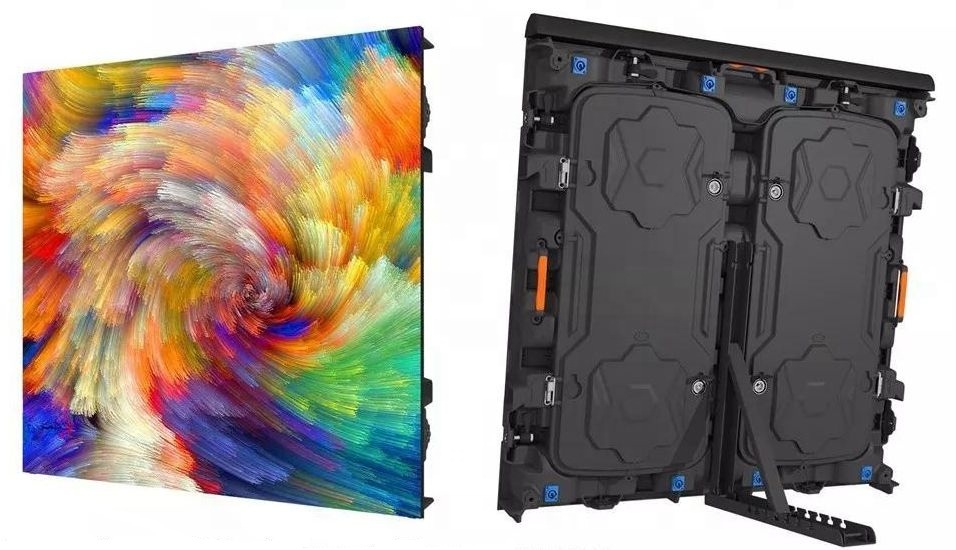
Sports arenas face highly volatile meteorological conditions. The ingress protection rating of the display cabinets is a critical specification. An IP65 rating means the front of the screen is completely protected against dust ingress and low-pressure water jets. Heavy rainfall will not penetrate it. Extreme coastal or tropical environments might require an IP68 rating for hermetic sealing. Additionally, high-quality outdoor screens utilize conformal coating on the internal printed circuit boards. This prevents moisture-induced short circuits.
Outdoor visual systems must survive drastic thermal shifts. Hardware needs to function flawlessly from freezing winter matches dropping to minus 20 degrees Celsius, all the way to scorching summer afternoons hitting 50 degrees Celsius. Achieving this requires robust internal architecture, UV-resistant diode encapsulation, and premium materials that resist warping under thermal expansion.
Durability in a sports arena extends to surviving the sport itself. Fast-moving balls and colliding athletes frequently strike stadium perimeter displays. Purpose-built perimeter screens feature specialized mechanical protections. Soft thermoplastic polyurethane rubber masks cover the LED modules to absorb projectile impacts. Padded EVA foam cushions sit on the top edge of the cabinets. These critical features protect players from lacerations or concussions during intense out-of-bounds collisions.
How a screen interacts with television cameras matters just as much as how it looks to the naked eye. Film a standard low-refresh-rate screen with a high-speed broadcast camera, and you will see aggressive flickering or visible scan lines. The camera shutter speed captures the micro-moments when the LEDs refresh their electrical state. Flickering logos on national television are entirely unacceptable for corporate sponsors paying premium advertising rates.
Modern sports facilities must implement hardware with an ultra-high refresh rate to eliminate broadcast interference. The current baseline standard for televised sports venues is 3840Hz. The display redraws the image 3,840 times per second. This rapid cycling far exceeds standard broadcast equipment capabilities. Slow-motion replays and live panning shots capture perfectly stable, artifact-free sponsor graphics.
Visual depth is crucial for broadcast quality. Premium outdoor screens utilize black surface-mounted device LEDs to drastically improve the contrast ratio. A darker physical screen surface absorbs ambient light. Emitted colors appear significantly more vibrant. Coupled with a 14-bit or 16-bit grayscale depth, the display renders millions of subtle color gradients to prevent color banding.
When equipping a modern sports venue, recognize that not all screens serve the same purpose. The architectural layout and the intended viewing distance dictate the specific hardware required. Deploying the correct screen maximizes both fan engagement and advertising revenue.
Application Zone | Recommended Pixel Pitch | Required Brightness | Refresh Rate | Key Engineering Feature |
|---|---|---|---|---|
Main Scoreboard | P8 - P10 | 8,000+ nits | 3840Hz | Lightweight aluminum cabinets, rear maintenance |
Perimeter Board | P4 - P5 | 6,000 - 8,000 nits | 3840Hz | Soft TPU masks, top EVA foam cushions, front service |
Fascia / Ribbon Board | P6 - P8 | 6,000 nits | 3840Hz | High contrast ratio, wide viewing angle |
Deploying hundreds of square meters of high-brightness visual technology introduces massive electrical overhead. Running a standard outdoor display at peak brightness consumes huge amounts of kilowatt-hours. Facility managers must evaluate energy efficiency rigorously. Modern systems utilize Common Cathode technology. This advanced circuit design supplies precise, segregated voltages to the red, green, and blue LED chips independently. Targeted power distribution reduces unnecessary heat generation and lowers overall power consumption by up to 30 percent.
Heat destroys electronic longevity. Inefficient heat dissipation leads to rapid diode degradation, color shifting, and eventual module failure. Evaluate cabinet cooling mechanisms carefully. Traditional systems rely on internal mechanical fans. Fans introduce moving parts that fail over time and draw in excess dust. Premium fanless designs utilize die-cast aluminum cabinets engineered with integrated geometric heat sinks. The high thermal conductivity of the aluminum passively dissipates heat away from internal components. This extends the operational lifespan and significantly reduces long-term maintenance costs.
Stadium structures dictate service protocols. Rear maintenance serves as the standard for elevated scoreboards. Technicians safely access internal components via integrated catwalks behind the screen. Ribbon boards mounted flush against concrete tiers require a different approach. Front-serviceable modules are mandatory in these tight scenarios. Technicians use specialized magnetic tools to extract and replace a malfunctioning module in seconds without dismantling the entire cabinet array.
Hardware remains useless without reliable software driving it. Stadium AV integrators require centralized, low-latency control systems to manage multiple display zones simultaneously. High-quality control ecosystems allow production teams to switch seamlessly between live camera feeds, pre-rendered sponsor videos, and real-time data integrations without frame drops or visual stuttering.
Procuring commercial-grade AV hardware requires strict adherence to international safety standards. Demand comprehensive documentation proving the products hold CE, RoHS, FCC, and UL certifications. Operating uncertified electrical equipment in a public stadium presents severe liability and fire safety risks.
A premium manufacturer operates as an engineering partner rather than a simple box-shipping vendor. Sports arenas feature unique architectural layouts. They often require custom cabinet dimensions to accommodate curved stadium corners, specific weight load restrictions, and bespoke power distribution setups. Evaluate suppliers based on their ability to provide comprehensive structural CAD drawings and thermal load calculations prior to purchase.
The true value of a manufacturing partner reveals itself after installation finishes. Hardware lifecycle depends heavily on replacement part availability. Secure a robust Service Level Agreement and a comprehensive warranty. Reliable manufacturers produce the entire screen from a single, uniform batch of LEDs. They provide a dedicated cache of spare modules, receiving cards, and power supplies from that exact batch. This ensures future repairs do not result in mismatched colors or uneven brightness patches across the display surface.
Choosing the right visual system requires meticulous planning and a deep understanding of the stadium environment. Balance brightness capabilities, physical durability, pixel pitch, and broadcast readiness carefully. Budget-tier screens might look appealing on a spreadsheet. However, investing in a high-quality, commercial-grade stadium perimeter LED display prevents costly broadcasting errors and drastically improves the fan experience.
A stadium screen is a powerful, revenue-generating asset capable of driving massive ROI through dynamic sponsor advertisements. Partner with certified manufacturers and prioritize advanced features like high refresh rates and weatherproofing to future-proof your arena. Ready to upgrade your venue's visual infrastructure? Explore high-performance solutions tailored for live sports. Visit GZQCLED to discover reliable, broadcast-ready outdoor displays that maximize your advertising revenue today.
Screens exposed to direct daylight must produce a minimum of 6,000 nits to prevent image washout. In regions with intense direct sunlight, engineers strongly recommend displays capable of 8,000 to 10,000 nits. The system must also include automated ambient light sensors to dynamically reduce brightness during evening events, preventing dangerous glare.
Commercial-grade screens engineered with proper thermal management are rated for approximately 100,000 hours of operation. In a practical stadium environment, this translates to 10 to 12 years of reliable service. Achieving this lifespan requires rigorous adherence to maintenance schedules and operating the screen at optimal brightness levels rather than 100 percent capacity constantly.
DIP is an older, highly robust technology where individual red, green, and blue bulbs are soldered separately. It offers extreme brightness but limits resolution. SMD technology encapsulates the three diodes into a single compact chip. SMD provides wider viewing angles, superior color blending, and allows for much tighter pixel pitches like P4 or P5. SMD stands as the undisputed industry standard today.
Yes. Purpose-built sports perimeter screens are specifically engineered for athlete safety. Perimeter cabinets utilize shock-absorbing soft rubber louver masks over the diodes. Thick EVA foam cushions are mounted to the top of the cabinets. These features absorb kinetic energy during high-speed collisions, preventing severe player injuries while protecting internal electronics.
Pricing is calculated per square meter and varies heavily based on pixel pitch, brightness capacity, and cabinet materials. Budget-tier screens often incur higher long-term costs due to power inefficiencies and frequent component failures. Request customized quotes based on specific architectural dimensions and broadcast requirements rather than relying on generic flat-rate pricing.
Refresh rate indicates how many times per second the display hardware redraws the image. Standard screens operate at 1920Hz. This is sufficient for the human eye but inadequate for high-speed broadcast cameras, causing severe black scan lines and flickering on television. Televised sports arenas strictly require a high refresh rate of at least 3840Hz to ensure sponsor logos remain perfectly stable during slow-motion replays.
Extreme heat accelerates diode degradation and causes color shifting, while freezing temperatures can make plastic components brittle and introduce condensation. High-quality outdoor displays combat this using die-cast aluminum cabinets for passive heat dissipation, conformal-coated circuit boards to resist moisture, and UV-resistant masks. Proper thermal management is the most critical factor in preventing premature module failure.
Rear service cabinets require physical space behind the screen for technicians to access components, usually via a built-in catwalk. This is standard for large elevated scoreboards. Front service cabinets allow technicians to remove the LED modules directly from the front using specialized magnetic suction tools or front-facing screws. Front service is mandatory for ribbon boards mounted flush against concrete walls or tightly interlocked ground-level perimeter screens.