The live event industry is notoriously unforgiving regarding timelines and budgets. Production managers constantly walk a tightrope. They try to deliver mind-blowing visual experiences while battling shrinking load-in windows and skyrocketing labor costs. Enter the moveable Stage LED Display—a transformative technological solution. It effectively bridges the gap between spectacular visual performance and backend logistical efficiency. In this comprehensive guide, we explore how modern modular LED solutions maximize audience engagement. We will also look at how they simplify complex stage setups and ultimately deliver a robust return on investment for events of all scales.
Looking at recent industry shifts, the demand for immersive, experiential live events has skyrocketed. Audiences no longer accept flat, static stages. Touring companies and corporate event planners are rapidly adopting modular visual technologies to create dynamic, architectural environments. This trend is heavily influenced by the rise of extended reality and virtual production techniques bleeding into live stages. Consequently, equipment must now be hyper-flexible, capable of rapid deployment, and deliver camera-ready performance without fail.
Before diving into the intricate technical specifications and operational benefits, here is a structured overview of why modern visual technologies are fundamentally transforming live events.
Feature Category | Operational Benefit | Technical Advantage |
|---|---|---|
Visual Performance | Captivates audiences even in brightly lit, dynamic environments. | High brightness and superior contrast ratios compared to traditional projection. |
Deployment Speed | Drastically reduces load-in and teardown times, cutting labor fees. | Fast-lock mechanisms paired with lightweight die-cast aluminum cabinets. |
Application Versatility | Adapts seamlessly to multiple event types, ensuring maximum equipment utilization. | Modular designs supporting curved, flat, and immersive 3D configurations. |
Economic Return | Lowers hourly labor costs and significantly increases rental profit margins. | Durable components built specifically for frequent transport and rigorous cross-event usage. |
The live event industry operates on strict, uncompromising schedules. Production teams are constantly evaluating equipment that can deliver premium, immersive experiences without inflating operational costs to unsustainable levels.
For decades, production crews relied heavily on projection screens or static printed backdrops. While functional for their time, these older technologies present significant logistical bottlenecks today. Projection systems require specific focal lengths. This means valuable floor space must be sacrificed simply to accommodate projector placement. Furthermore, projectors struggle immensely in environments with heavy ambient lighting or dynamic stage spotlights. The result is often washed-out, dull visuals that disengage the audience.
In contrast, static backdrops offer zero creative flexibility. Once printed and rigged, the visual environment remains stubbornly unchanged throughout the entire performance. By acting as an active light source, a modern Stage LED Display bypasses these archaic constraints. It guarantees crisp, vibrant visuals whether the venue is bathed in ambient sunlight or piercing theatrical strobes. It also requires minimal physical depth, freeing up valuable stage real estate for performers.
Industry analysts tracking live event production note a definitive pivot toward modular visual technologies. As audience expectations for ultra-high-definition immersive environments grow, touring companies are abandoning monolithic sets. They favor scalable, moveable screens. This shift is driven by the absolute necessity to adapt to shrinking load-in windows without compromising visual fidelity.
What makes a system truly moveable is its fundamental architecture. Instead of a single massive screen, these systems consist of individual, standardized cabinets. Packaged in custom-fitted, shock-absorbent flight cases, these modular panels survive grueling touring routes safely. For audiovisual rental companies, this modularity means a single inventory of panels can form a massive concert backdrop one day. The very next day, that same inventory splits into multiple smaller breakout screens for a corporate conference.
Visual impact is the primary metric by which audiences judge the production value of an event. Delivering a flawless visual experience requires a deep understanding of specific technical capabilities.
Imagine a high-stakes corporate keynote where the presenter's slides are marred by a flickering screen on the live stream. In the era of ubiquitous smartphones and global broadcasting, a screen must perform flawlessly both to the naked eye and through a camera lens. Upgrading to a system with a 3840Hz high refresh rate ensures the visual output remains stable. It stays buttery smooth and completely artifact-free on camera.
Additionally, live performances utilize intense atmospheric lighting. An LED system must possess sufficient brightness to cut through dense fog, sweeping lasers, and direct spotlights. Indoor configurations often exceed 1000 nits, while outdoor setups demand upwards of 4500 nits to maintain absolute image clarity against solar glare.
Audience expectations have evolved far beyond flat, rectangular screens. Modern production design frequently incorporates immersive, architectural screen layouts. Moveable panels engineered with adjustable angle locks allow technicians to physically configure the screen into sweeping concave or convex curves.
This flexibility enables the creation of cylindrical centerpieces, wave-like DJ booths, or immersive tunnel entrances for sports teams. Some advanced systems even allow for 90-degree corner splicing. This creates seamless 3D cubes that add profound depth and a futuristic aesthetic to the stage environment.
Venue seating arrangements vary wildly. Ensuring visual equity for all attendees is a top priority for event organizers. Technical specifications regarding viewing angles dictate how far off-center an attendee can sit before the image degrades in color accuracy or brightness. High-quality surface-mount device technology typically provides wide viewing angles, such as 140 degrees horizontally and vertically. This ensures the visual impact remains stunning whether a VIP is seated directly in the front row or a general admission attendee is positioned far off in the upper arena wings.
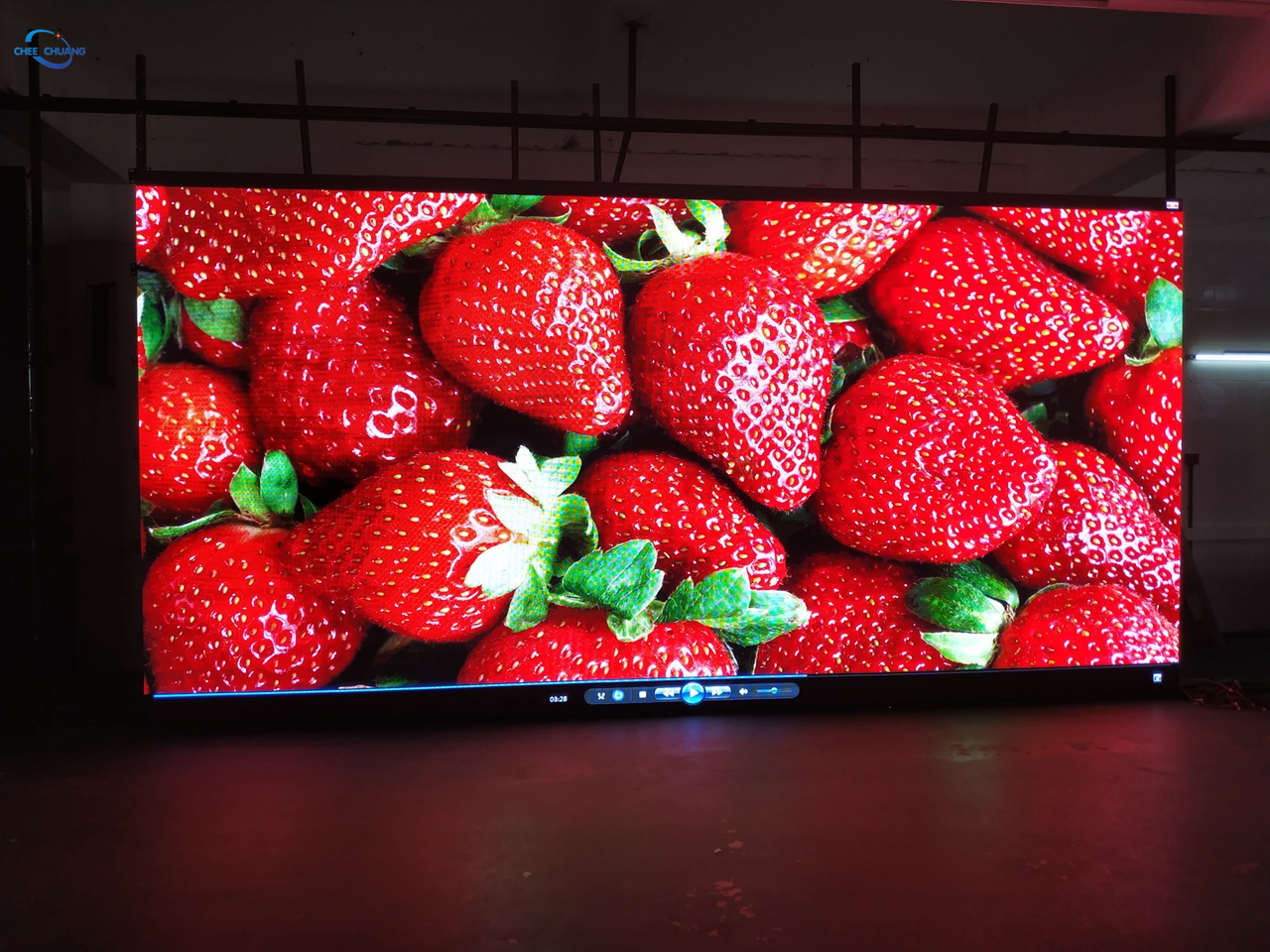
Labor is consistently one of the highest line items in any event budget. Therefore, the physical engineering of screen cabinets focuses specifically on minimizing setup time and reducing crew fatigue.
The physical weight of production equipment directly impacts transportation logistics and the toll on stagehands. Traditional iron cabinets were notoriously heavy and cumbersome to rig. Modern moveable systems utilize precision-engineered die-cast aluminum. This reduces the weight of a standard 500 millimeter by 500 millimeter cabinet to approximately 7 to 8 kilograms.
This ultra-lightweight design significantly reduces physical strain on the crew during a grueling 12-hour load-in. Furthermore, lighter overall screen weights place considerably less stress on venue rigging points and overhead trusses. This greatly simplifies engineering approvals for suspended installations.
Efficiency on the show floor is driven by smart cabinet hardware. Advanced moveable panels integrate quick-release fast-lock systems. Instead of requiring specialized tools or complex bolting procedures, these locks use spring-loaded or cam-driven mechanisms. They secure adjacent panels with a simple, satisfying twist or pull.
Building on this mechanical efficiency, many modern cabinets feature magnetic alignment modules and ergonomic, perfectly balanced handles. These deliberate design choices allow a single technician to hold a panel securely in place with one hand while engaging the locking mechanism with the other. This effectively enables true one-person installation.
For events with exceptionally strict load-in windows, innovative deployment methods are heavily utilized. Think of trade shows or multi-act music festivals where stage turnover happens in minutes. Some systems are designed to be pre-rigged on trusses while still sitting in their transport carts.
Other advanced solutions involve lift-fold mechanisms where entire rows of screens are hinged together. The rigging crew simply attaches the top row to a motorized chain hoist. As the hoist lifts, the subsequent rows unfold and lock into place automatically. These brilliant engineering methods can condense a multi-hour build into a fluid process taking mere minutes.
Selecting the correct hardware requires an objective, data-driven understanding of technical specifications. You must know how they align with the specific venue and audience distance.
Pixel pitch is the distance in millimeters from the center of one LED pixel to the center of the adjacent pixel. It directly dictates the resolution and optimal viewing distance of the screen. A lower pixel pitch results in higher resolution but comes at a steeper price point.
For the rental market, finding the delicate balance between high resolution and cost-efficiency is vital. A pitch of around 2.9 millimeters is widely considered the industry sweet spot. For instance, integrating a Moveable Event Rental LED Display with a P2.976 specification offers exceptional, broadcast-ready clarity for audiences located just a few meters away. It perfectly suits standard stage setups without incurring the premium costs associated with ultra-fine pitch boardroom screens.
Touring equipment is subjected to rigorous, often brutal physical demands. Cabinets are frequently bumped during forklift transport. They get dropped roughly during load-in and are exposed to massive acoustic vibrations from subwoofers during performances.
To mitigate this inevitable damage, professional rental panels incorporate extensive protective features. Foldable corner protectors shield the most vulnerable parts of the cabinet during ground-stacking. Advanced anti-collision soldering techniques reinforce the delicate connection between the LED diodes and the printed circuit board. Meanwhile, robust louver masks protect the diodes from direct frontal impacts from wayward microphone stands or props.
The venue inherently dictates the required environmental protection of the equipment. This is measured by the ingress protection rating. Indoor events typically require screens with an IP20 or IP31 rating. These protect against solid objects but not moisture.
If an event is hosted outdoors, the equipment must withstand unpredictable rain, dust storms, and direct, blinding sunlight. Outdoor-rated screens feature an IP65 rating. This indicates they are fully dust-tight and protected against powerful water jets from any direction. Furthermore, outdoor screens utilize specialized LED lamps capable of reaching much higher brightness levels to combat solar glare.
The high return on investment of modular visual technology is ultimately driven by its chameleon-like ability to service a wide spectrum of event types.
Picture an electronic dance music festival where the DJ booth is wrapped in a convex LED setup, pulsing perfectly in sync with the bass drops. In these environments, the visual production is just as critical as the audio. The high contrast ratios and rapid response times of modern LED technology ensure that aggressive strobe effects and fast-moving motion graphics are rendered sharply. This elevates the entire sensory experience.
In the corporate sector, the primary objective is clear brand communication and pristine professional presentation. Trade show floors are highly competitive, visually crowded spaces. Fast-deploy screens allow brands to construct massive, luminous digital walls that attract attention from across the exhibition hall. This makes standard printed banners look completely obsolete.
Traditional theater relied heavily on painted wood and heavy canvas for set design. Today, dynamic digital backdrops are rapidly replacing static scenery. A digital backdrop can transition a scene from a sunlit, tranquil forest to a dark, cyberpunk cityscape instantly. In fashion shows, runway-flanking screens display ambient textures that complement the seasonal clothing collections. This creates a cohesive atmospheric mood.
Procuring the equipment is only half the equation. Integrating it into the broader stage design requires meticulous technical planning. A well-designed setup maximizes the capabilities of your equipment while ensuring every attendee enjoys an optimal viewing experience.
One of the most critical steps in deploying a Stage LED Display is determining the correct screen size and understanding the relationship between pixel pitch and viewing distance. To calculate the optimal viewing distance, industry professionals rely on a standard formula. You simply multiply the pixel pitch in millimeters by two or three to get the viewing distance in meters.
For example, a P2.976 screen has a minimum viewing distance of approximately 3 meters and an optimal viewing distance of 6 to 9 meters. When determining the overall screen size, production managers must carefully consider the venue dimensions and the desired aspect ratio. Sticking to standard ratios like 16:9 prevents the dreaded pixelation effect, ensuring the audience sees crisp, continuous imagery.
A common yet catastrophic mistake in production design is treating the video wall and the stage lighting as separate, competing entities. An improperly calibrated screen can easily overpower stage lighting, leaving performers in dark silhouette.
To prevent this, lighting directors must actively balance the brightness of the screen with the stage wash. During a live performance, it is often necessary to dial back the screen brightness to 60 or 70 percent via the control software. This matches the intensity of the front-of-house spotlights. Color temperature matching, usually aligning the screen to 3200K or 5600K, ensures that skin tones look natural and healthy on camera.
For audiovisual rental companies and event production agencies, equipment procurement is a strict financial calculation. The initial capital expenditure must be justified by long-term usability and the ability to generate consistent rental revenue.
Labor is consistently one of the highest variable costs in the event production industry. Union stagehands and specialized rigging crews charge premium hourly rates. Modern moveable screens are engineered specifically to mitigate these exact costs.
Consider a standard 5-meter by 3-meter stage backdrop. Using older technology, this might require four technicians working for six grueling hours. With a modern fast-lock system, two technicians can easily complete the exact same installation in under two hours. By cutting setup times by up to 60 percent, production companies drastically reduce overtime pay. They can then take on more events per week, directly padding their bottom-line profitability.
A strong business case relies heavily on asset utilization. High-quality moveable panels are designed for longevity, boasting LED diode lifespans of up to 100,000 hours. However, in the rental market, the physical durability of the cabinet is just as important. The cross-event versatility means an AV company can break down a massive 100-panel festival screen into five smaller 20-panel screens for corporate breakout rooms the following week. This ensures the equipment constantly generates revenue.
Selecting a manufacturer or supplier is a critical business decision that extends far beyond the initial purchase price tag. Event professionals must evaluate the technical ecosystem and the manufacturer's commitment to post-purchase support.
When evaluating potential suppliers, buyers should conduct a rigorous assessment of the hardware specifications. Verify the origin of the internal components, as the quality of the driving integrated circuits directly affects grayscale performance. Furthermore, inquire deeply about batch consistency. If you need to expand your inventory next year, the manufacturer must provide LEDs from the exact same color batch to prevent noticeable color discrepancies.
For production companies seeking a solution that perfectly balances high-resolution visual impact with labor-saving deployment, specific models are engineered exactly for these demands. A prime example is the P2.976 Moveable Event Rental LED Display.
This specific configuration has emerged as the industry sweet spot. It provides a dense enough pixel pitch to ensure stunning image clarity for attendees standing just a few meters away, without the prohibitive costs of sub-2 millimeter pitches. Featuring ultra-lightweight die-cast cabinets, 3840Hz refresh rates, and rapid deployment mechanics, these solutions directly address the operational pain points of the live event industry. They ensure both spectacular audience experiences and backend logistical efficiency.
The success of modern live events hinges on the delicate synergy between breathtaking on-stage visuals and rigorous backstage efficiency. Far from being just a simple screen, a moveable stage display represents a strategic investment in your production quality and operational speed. By cutting setup times and drastically slashing labor costs, this modular equipment pays dividends long after the final curtain falls. We encourage you to objectively evaluate your current staging limitations. If you are ready to upgrade your visual infrastructure, explore specialized rental solutions to elevate your next major production and maximize your rental profitability.
For most indoor stage environments, a pixel pitch between P2.6 and P3.9 is considered optimal. Specifically, P2.976 has become the industry standard for rental and staging. It provides excellent image clarity and high resolution for audience members situated relatively close to the stage. At the same time, it remains highly cost-effective and durable for constant transport and assembly.
Setup times vary based on the overall size of the screen and the size of the crew. However, modern moveable screens are designed explicitly for rapid deployment. Thanks to lightweight die-cast aluminum cabinets and advanced fast-lock mechanisms, a standard 5 by 3 meter stage backdrop can typically be assembled by a two-to-three-person crew in under two hours. This is significantly faster than older, traditional staging technologies.
Indoor screens and outdoor screens are engineered differently, primarily regarding brightness and ingress protection ratings. Indoor screens generally have an IP rating of IP20 to IP31 and brightness levels around 1000 nits. They should only be used outdoors if they are completely protected from weather conditions like rain and wind, and are not facing direct sunlight, which would wash out the image. For true outdoor events, an IP65-rated screen with high brightness exceeding 4500 nits is strictly required.
These screens transform static stages into dynamic, immersive environments. They offer vibrant color reproduction, deep contrast ratios, and high brightness that cuts through intense stage lighting. Because the panels can be seamlessly spliced together, they create a massive, uninterrupted digital canvas. This allows production teams to display moving backgrounds, real-time camera feeds, and 3D visual effects that synchronize flawlessly with the audio and lighting. This elevates the overall sensory experience for the audience.
High-quality LED panels are built for endurance. The LED diodes themselves typically boast a lifespan of up to 100,000 hours of continuous use. For a rental company, the actual functional lifespan depends heavily on physical handling, maintenance routines, and the quality of the flight cases used during transport. With proper care and routine technical servicing, a premium modular screen can easily provide five to seven years of profitable rental service.
Safe transportation is crucial for maintaining the integrity of the equipment. Modular panels are packed into custom-built flight cases. These cases feature thick, shock-absorbent foam interiors molded to fit the exact dimensions of the cabinets. The rigid exterior of the flight case protects against blunt impacts, while the foam dampens vibrations from trucks and forklifts. Technicians should always ensure cabinets are locked securely within the case slots and that corner protectors are engaged before closing the lid.