High-Density Means Fine Pixel Pitch: High-density LED displays are typically P2.5 and below. Pitches like P2.0 or P1.5 are essential for indoor spaces where the audience is close to the screen.
Seamless Visuals: Unlike traditional LCD video walls, an indoor LED display offers a completely bezel-free viewing experience. This ensures uninterrupted image delivery.
Crucial Specs to Check: Always align your pixel pitch with your optimal viewing distance. Ensure a high refresh rate of 3840Hz or higher for commercial and broadcast environments.
Total Cost of Ownership: Budgeting requires looking beyond the screen itself. Buyers must factor in installation, video controllers, structural support, and energy efficiency.
Front Maintenance is Key: For commercial spaces with limited room, choosing a display with front-serviceable magnetic modules saves significant time, space, and maintenance costs.
Recent market analyses highlight a massive shift in commercial digital signage. The adoption rate of fine-pitch LED solutions is accelerating rapidly across the globe. This surge is heavily driven by dropping manufacturing costs for sub-2.5mm pixel pitches and a growing demand for experiential retail.
Businesses are realizing that seamless, high-brightness displays are no longer just a luxury. They are a baseline expectation for modern consumer engagement. As the technology matures, architects and AV integrators are moving away from legacy LCD video walls. They are actively integrating direct-view LED technology into corporate lobbies, flagship retail stores, and broadcast studios to create immersive environments.
As engineers, when we specify high-density in the commercial display industry, we refer to screens packed with a massive number of light-emitting diodes within a specific area. This density is measured by a metric called pixel pitch. Pixel pitch is the exact distance in millimeters between the center of one LED pixel and the center of the adjacent pixel.
A smaller pixel pitch means the diodes are clustered closer together. This results in a higher pixel density and a much sharper image. For indoor commercial environments where viewers are typically standing near the screen, high-density usually refers to fine pixel pitches like P2.5, P2.0, or P1.8. Specifically, these fine-pitch screens eliminate the visible grid effect seen on older displays. They provide a smooth, high-definition image that rivals premium television monitors.
For years, commercial spaces relied on LCD video walls. However, high-density LED technology has fundamentally shifted the market due to several structural and visual advantages.
The most critical difference is the bezel. LCD panels require physical frames. This means an LCD video wall will always have visible grid lines or seams where the screens meet. In contrast, a high-density screen is built using modular panels that fit together seamlessly. This creates one continuous, unbroken canvas.
Feature | Traditional LCD Video Wall | High-Density LED Display |
|---|---|---|
Visual Seams | Visible bezels create a distracting grid effect | 100% seamless canvas |
Brightness | Low to medium, struggles with ambient glare | High and easily adjustable for any lighting |
Maintenance | Usually requires complex rear access | Front-serviceable magnetic modules |
Color Contrast | Standard contrast ratios | Ultra-high contrast with deep, true blacks |
Imagine a customer walking into a flagship showroom. They step within a few feet of a standard digital sign with a high pixel pitch like P4 or P5. The image instantly breaks down into blocky, distracting squares. This degrades the premium visual experience.
High-density screens resolve this issue entirely. By utilizing a fine pixel pitch, these digital canvases allow customers to stand just two to three meters away without discerning individual pixels. This close-range clarity is vital. It allows you to display detailed product textures, intricate text, and high-definition brand videos flawlessly.
The physical environment of a commercial space directly influences consumer psychology. Replacing static posters or outdated projectors with a vibrant video wall signals modernization and premium status. Furthermore, high-density LED displays deliver exceptional color reproduction and deep contrast. This ensures that marketing assets are displayed exactly as the creators intended. This level of visual fidelity captures foot traffic attention more effectively than static signage. It increases dwell time and fosters a stronger sense of brand trust among potential buyers.
Commercial architecture rarely conforms to standard television sizes. One of the primary advantages of a modular video wall is its physical flexibility. Because the displays are built from individual cabinets, they can be configured to fit virtually any spatial design.
Buyers can specify curved screens to wrap around pillars. They can request right-angle corner screens for immersive 3D illusions known as naked-eye 3D. They can even create custom aspect ratios to fit unique wall spaces. This adaptability allows architects and AV integrators to treat digital displays as active building materials rather than mere electronic add-ons.
Selecting the correct pixel pitch is the most important financial and technical decision when purchasing an LED display. A simple engineering formula exists to help buyers make this choice. The pixel pitch in millimeters roughly equals the minimum viewing distance in meters.
For example, a premium P2 display utilizes advanced SMD1515 diodes. This specific hardware allows customers to stand just two meters away and experience a flawless image. If the audience is 1.5 meters away, a P1.5 screen is required. Overestimating the needed pixel pitch results in unnecessary capital expenditure with no visible benefit to the viewer.
The physical chassis holding the LED modules is known as the cabinet. High-density indoor screens require extreme precision to ensure zero visible seams between panels. Therefore, cabinet design dictates the physical integrity of your wall.
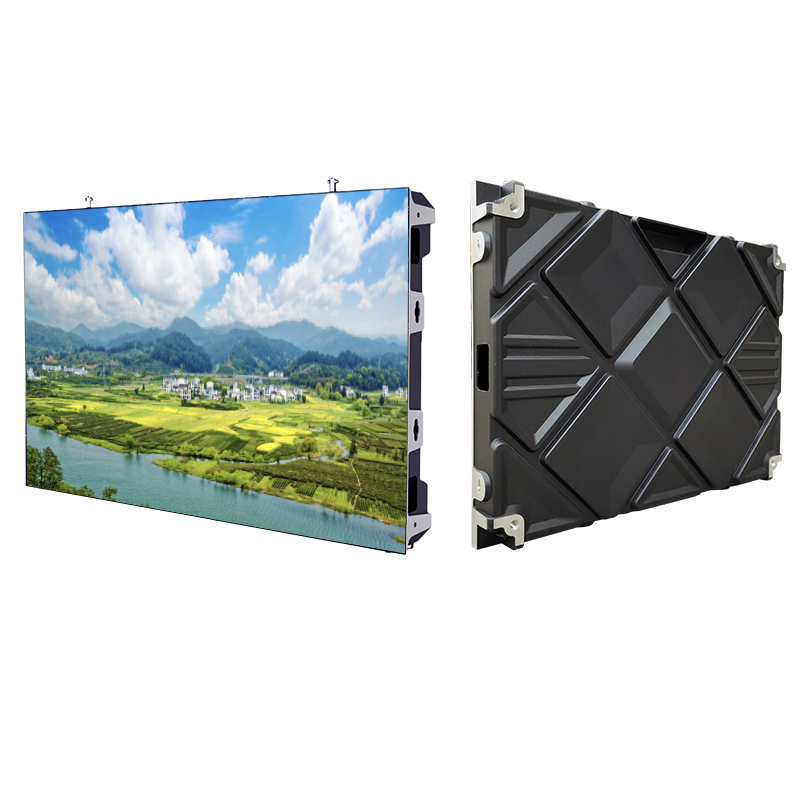
We highly recommend a 640x480mm die-cast aluminum cabinet. This exact dimension is an industry gold standard. It ensures perfect flatness and seamless splicing. It weighs significantly less than traditional iron cabinets while resisting thermal expansion perfectly. Additionally, this 4:3 ratio cabinet makes achieving standard 16:9 video production formats incredibly simple.
The refresh rate dictates how many times per second the LED hardware redraws the image on the screen. For standard commercial use, a basic refresh rate is functional. However, for high-end commercial spaces, we always specify a refresh rate of 3840Hz or greater.
In addition, always verify the scan rate. A 1/32 scan method paired with a 3840Hz refresh rate guarantees absolute visual stability. This ensures the screen does not exhibit black scan lines or flickering when filmed with smartphones. If your retail space is likely to appear on social media, this specification is non-negotiable. A high grayscale level ranging from 14-bit to 16-bit also ensures smooth color gradients and prevents banding in complex lighting scenarios.
Picture a luxury boutique launching a new seasonal line. Capturing consumer attention requires dynamic and flawless visual merchandising. Luxury brands frequently utilize fine-pitch screens for immersive product launches. Investing in a premium indoor LED display provides the exact resolution needed to showcase intricate product details. Shoppers standing just a few feet away can clearly see the stitching on a designer handbag or the facets of premium jewelry.
Corporate headquarters are rapidly adopting bright and crisp indoor video walls. In lobbies, these screens act as digital greeting cards. They display corporate achievements, stock data, or ambient digital art to impress visiting clients. In boardrooms, fine-pitch screens such as P1.5 or P1.8 allow executives to present complex spreadsheets and high-definition video conferencing without turning off the room lights.
Security centers and IT control rooms operate around the clock. They rely on the accurate interpretation of dense data. High-density LED video walls are non-negotiable in these environments. The lack of bezels ensures that critical data points are not obscured by grid lines. The fine pixel pitch allows operators to read small text and monitor multiple camera feeds simultaneously without eye fatigue.
The primary driver of an LED display cost is the pixel pitch. The lower the pitch, the higher the density of LED diodes per square meter. This directly increases manufacturing costs. A P1.5 screen will cost significantly more per square meter than a P2.5 screen. Buyers must balance their desired resolution with the total physical size of the screen to find a cost-effective hardware solution.
An LED screen cannot function independently. It requires a robust control system to translate video signals into data the LEDs can display. Buyers must budget for sending cards, receiving cards built into the cabinets, and video processors. Industry-standard control systems ensure stable signal transmission, precise color calibration, and user-friendly content management.
The physical display is only part of the investment. Buyers must account for the structural engineering required to mount the screen safely. This includes custom steel or aluminum mounting frames. Professional installation labor is required to align the cabinets perfectly and calibrate the software. Shipping costs for heavy electronic equipment must also be factored into the initial budget.
Because square footage in commercial real estate is incredibly expensive, choosing a system that maximizes space is crucial. Therefore, we strongly recommend that buyers select a display featuring front maintenance, also known as front serviceability.
Front-serviceable screens are designed intelligently. Technicians can remove individual LED modules, power supplies, and receiving cards directly from the front of the screen using a specialized magnetic suction tool. This allows the entire video wall to be mounted completely flat against a wall. It saves valuable floor space that would otherwise be required for a rear-access maintenance walkway.
Electronic components generate heat. This thermal energy can degrade LED lifespan if not managed properly. High-quality indoor screens are designed to be entirely fan-less. This ensures silent operation, which is a critical feature for boardrooms and retail spaces. Instead of noisy fans, these displays rely on the die-cast aluminum cabinet itself to act as a massive heat sink. It efficiently dissipates thermal energy into the surrounding air.
Commercial LED displays are typically rated for a lifespan of 100,000 hours, equating to roughly 11 years of continuous operation at standard brightness. However, it is normal for a small fraction of individual LED diodes to fail over time. This is commonly called a dead pixel.
Because of the modular nature of the technology, dead pixel management is remarkably simple. Technicians use a magnetic tool to pop out the specific module containing the dead pixel. They snap a replacement module into place in a matter of seconds. This results in absolute zero downtime for the display.
Selecting the appropriate hardware is only one half of the purchasing equation. The other half is partnering with a reliable manufacturer. The commercial display market is highly saturated. The variance in manufacturing standards can significantly impact the longevity and performance of your investment. Evaluate suppliers on their engineering capabilities, quality control processes, and post-installation support infrastructure.
In commercial environments, electronic equipment must adhere to strict safety and operational standards. Uncertified hardware poses significant risks. These include electrical fires, radio frequency interference with other commercial equipment, and potential liabilities regarding commercial insurance policies.
When evaluating a manufacturer, request documented proof of relevant certifications. CE certification ensures baseline safety for public indoor spaces in Europe. FCC certification guarantees the screen will not disrupt internal communication signals in the US. RoHS confirms the absence of hazardous materials. A reputable supplier will have these certificates readily available for their specific cabinet models.
Modern commercial architecture rarely relies on perfectly flat walls. Corporate lobbies feature curved surfaces. High-end retail environments frequently utilize structural pillars or sharp corners for visual merchandising. Therefore, a supplier must have the ability to customize the physical structure of the screen.
When integrating a custom indoor LED display into complex architectural elements, the manufacturer must demonstrate a proven track record of structural engineering. Buyers should ask for case studies or CAD drawings from previous installations that match their specific spatial requirements.
The long-term total cost of ownership is heavily dictated by the warranty and the approach to after-sales support. One of the most critical aspects of purchasing an LED video wall is the management of spare parts.
LED diodes are manufactured in batches. Diodes from different batches will have microscopic variations in color temperature and brightness. If a module fails three years after installation and is replaced with a module from a different manufacturing batch, it will look like a patchwork square on your screen.
To prevent this, premium suppliers automatically include a specific percentage of spare modules, power supplies, and receiving cards manufactured from the exact same manufacturing batch as your primary screen. Furthermore, evaluate the Service Level Agreement. Determine if the supplier offers remote troubleshooting for their control systems and what their guaranteed response time is.
Investing in a high-density screen requires careful planning and engineering insight.
You must balance pixel pitch, viewing distance, and structural limits.
This ensures a seamless and bezel-free visual experience.
The right screen elevates your commercial space entirely.
It adds massive aesthetic and business value.
Ready to transform your indoor environment today?
Explore our premium P2 high-density advertising screens from QCLED.
Contact our engineering team for a custom quote today!
For a small to medium-sized retail environment, engineers generally recommend a pixel pitch between P1.8 and P2.5. The decision relies entirely on the optimal viewing distance of your customers. In a standard retail store, shoppers typically walk within 2 to 3 meters or 6.5 to 10 feet of the digital signage. Based on the industry rule of thumb, a P2 screen provides the ideal balance. At this density, the human eye cannot distinguish individual pixels from 2 meters away. This results in a smooth, high-definition image that closely mimics an LCD screen but without the restrictive bezels.
Under standard commercial operating conditions, high-quality LED displays are rated for a lifespan of up to 100,000 hours. This translates to slightly more than 11 years of continuous operation. The screen does not simply turn off at the 100,000-hour mark. Instead, this metric refers to the L70 standard, meaning the diodes will have degraded to approximately 70% of their original maximum brightness. To maximize the lifespan of your indoor LED display, ensure the screen is installed in a well-ventilated area to manage heat dissipation. Running the screen at 70% to 80% of its maximum brightness capacity significantly reduces thermal stress on the internal components.
Standard indoor screens are not engineered to compete with direct sunlight. A typical high-density indoor screen outputs between 600 and 1,000 nits of brightness. This is perfect for artificially lit environments like lobbies and shopping aisles. However, direct sunlight can exceed 5,000 nits. If a standard indoor screen is placed in a storefront window facing the sun, the image will appear washed out. For window-facing applications, buyers must specify a semi-outdoor or high-brightness indoor screen, which typically outputs between 2,500 and 4,000 nits.
Updating content on a modern commercial video wall is a streamlined process that does not require advanced IT programming skills. These displays are operated via dedicated video processors and media players equipped with Content Management Systems or CMS. Depending on your security protocols, the system can be configured synchronously mirroring a live PC output or asynchronously storing media directly on the internal memory of the player. Marketing teams can upload MP4 videos, high-resolution images, and scheduling data remotely over a secure local area network or via cloud-based portals.
No, you do not need to replace the entire screen, nor do you need to dismantle the video wall. One of the primary engineering advantages of an LED display over traditional LCD monitors is its modularity. The screen is composed of hundreds of smaller magnetic modules. If a single diode is damaged, maintenance personnel use a specialized magnetic suction tool to pull that specific module straight off the front of the cabinet. The damaged module is simply unplugged, and a spare module is snapped into place. This hot-swapping process takes less than a minute and ensures minimal downtime.
SMD stands for Surface Mounted Device, where individual LED chips are encapsulated and then soldered onto the circuit board. This is the most mature and widely used technology for commercial indoor displays, offering excellent color consistency and easy maintenance. COB stands for Chip on Board, where the LED chips are directly bonded to the circuit board and covered with a protective resin layer. COB displays offer higher durability against physical impact and moisture, making them ideal for ultra-fine pitches below P1.2, but they are generally more expensive and harder to repair on-site than SMD displays.
Power consumption depends heavily on the pixel pitch, screen size, and operating brightness. Engineers look at two metrics: maximum power consumption and average power consumption. Maximum power occurs when the screen displays full white at 100% brightness, often reaching 600 to 800 watts per square meter. However, in real-world commercial applications displaying regular video content, the average power consumption is typically one-third of the maximum, hovering around 200 to 300 watts per square meter. Modern screens utilize energy-efficient components like common cathode power supplies to further reduce this electrical load.