Traditional faceted video walls often fall short in modern commercial spaces. Visible bezels and rigid flat panels break immersion instantly. They heavily limit creative spatial design. Architects, broadcast engineers, and event producers face a critical shift today. They are rapidly transitioning from standard LED Screens to seamless curved configurations. This change matters deeply because modern audiences demand flawless, uninterrupted visual environments. Flat panels simply cannot deliver this level of engagement inside complex architectural spaces. This article provides a practical evaluation framework for modern decision-makers. You will learn how to assess implementation risks, structural requirements, and crucial technical specifications before finalizing your procurement. We will explore exactly why these curved digital canvases consistently outperform older technology across various high-stakes industries.
True Seamlessness Drives Engagement: Eliminating the "grid effect" of traditional displays increases viewer retention in high-stakes environments like broadcast and experiential retail.
Architectural Flexibility: Curved LED displays adapt to existing infrastructure (columns, rounded walls), maximizing usable commercial square footage.
Deployment Realities: Successful implementation requires prioritizing front-serviceable modules and precise structural engineering to maintain a flawless bend radius.
Traditional LCD walls rely heavily on noticeable bezels. These thick seams create a frustrating "grid effect" for viewers. Visible lines disrupt text readability instantly across large digital canvases. They force the human eye to jump across physical gaps continually. This constant visual interruption distorts faces during live broadcasts significantly. Such disruptions break the immersive illusion completely. Audiences notice these hardware flaws immediately. Premium commercial spaces require absolute visual perfection to retain visitor attention.
Defining true seamlessness requires understanding modern manufacturing precision. Engineers build specialized flexible modules using pliable printed circuit boards. Precision-machined cabinets lock these components together perfectly. Manufacturers often use die-cast aluminum to build these rigid structural frames. They create zero-gap curves across massive architectural surfaces seamlessly. Individual diodes align perfectly without leaving any structural gaps. This exact alignment ensures uniform pixel spacing horizontally and vertically. You cannot see where one panel ends and another begins.
The return on initial investment becomes clear quite quickly. Uninterrupted visual continuity drives exceptional viewer engagement. Stronger engagement translates directly to higher premium advertising rates. Commercial spaces leverage this flawless aesthetic effectively for brand partnerships. Corporate lobbies improve general brand perception immediately upon installation. Visitors associate seamless technology naturally alongside industry leadership and innovation. You capture audience attention far longer using gapless visuals. High-end environments justify the hardware upgrade through superior audience retention alone.
We see distinct advantages across several specific high-end applications. Curved LED Displays solve unique environmental challenges effortlessly.
Broadcast Studios and Virtual Production: Television cameras demand absolute flawless backgrounds. Curved setups eliminate off-axis color shift perfectly. They accommodate extreme viewing angles effortlessly during live multi-camera shoots. The physical curve maintains a uniform distance to your on-screen talent. This consistency ensures perfect focus and even lighting continuously. Production teams save countless hours on post-production corrections.
Museums and Immersive Events: Flat screens fail at complex spatial storytelling. Wrapping an audience inside a concave display creates massive psychological depth. This visual scale feels impossible using traditional flat panels. You plunge visitors directly into the narrative environment seamlessly. They feel completely surrounded by the historical or artistic content. Experiential designers rely heavily on this deep sensory immersion.
Retail and Commercial Architecture: Structural liabilities become highly valuable digital real estate. Massive concrete pillars normally waste valuable retail floor space. You can wrap these structural columns seamlessly using flexible modules. Curved bulkheads transform into dynamic advertising canvases easily. This strategy maximizes your usable commercial square footage effectively. Retailers generate new revenue streams from previously unusable architectural elements.
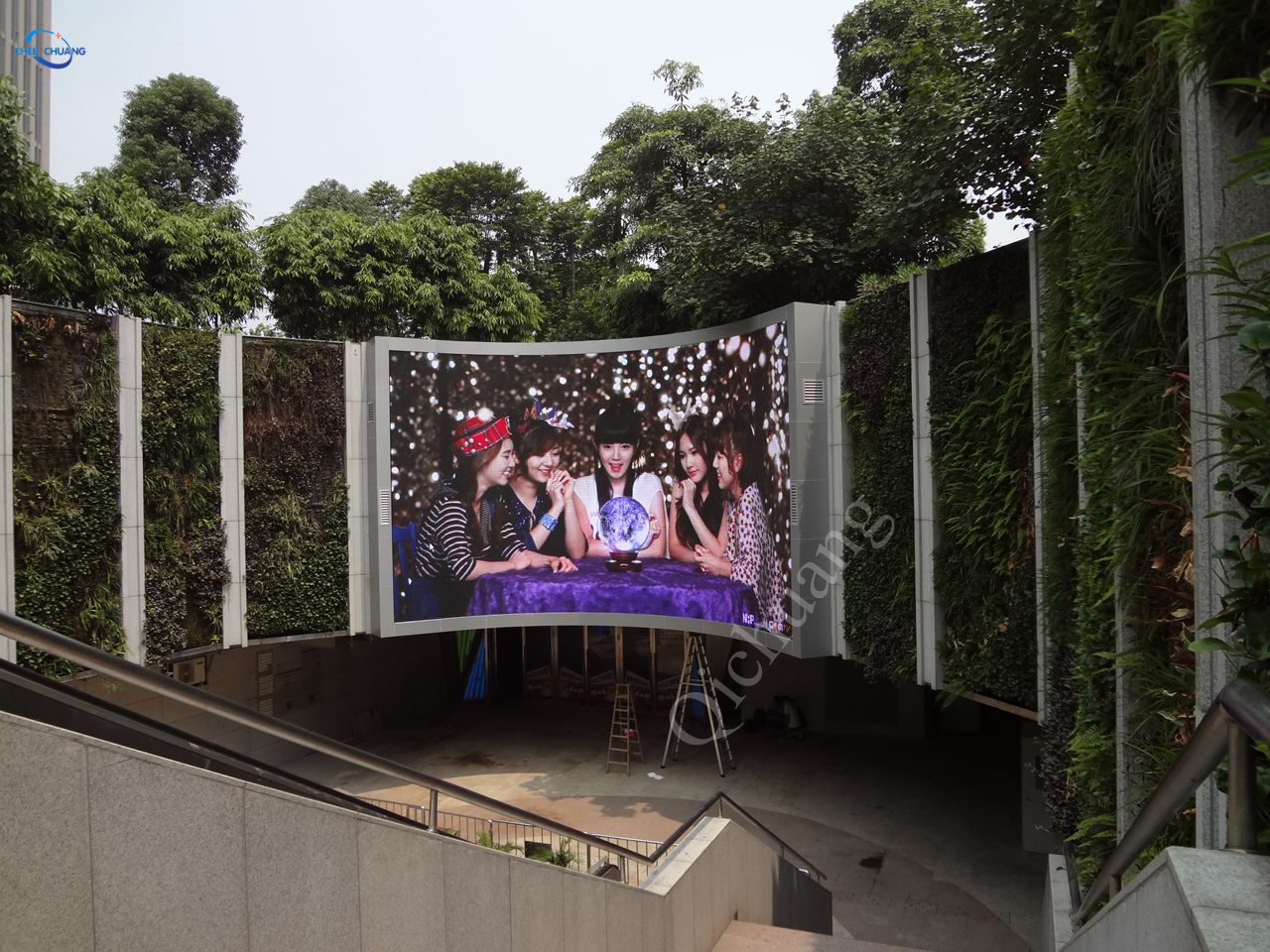
Specifying the right technology requires careful technical evaluation. You must match physical architectural constraints to specific diode capabilities.
Bend radius limits dictate your overall design boundaries strictly. Flexible modules follow strict material physics rules. Bending them too tightly damages the delicate internal copper layers. You must match the minimum bend radius carefully before installation. Concave designs curve inward directly toward the primary viewer. Convex designs wrap outward around existing physical structures. High-quality modules handle both bending directions safely and reliably. Always verify your specific architectural constraints before ordering custom panels. Pushing a module beyond its rated flexibility causes permanent hardware failure.
Pixel pitch determines visual clarity dramatically across short distances. Many buyers over-specify pitch unnecessarily, wasting their hardware budget. A tight 1.5mm pitch works best for extremely close viewers. A standard 2.5mm pitch suits audiences standing further back comfortably. You must evaluate the closest viewer proximity accurately beforehand. Measure the absolute shortest distance in your curved environment. Choose your resolution strictly based on this specific physical metric.
Let us compare true flexible technology against traditional rigid options.
Feature | True Flexible Modules | Faceted Hard Cabinets |
|---|---|---|
Structural Integrity | Bends smoothly without stress points | Creates harsh angles at joining edges |
Color Uniformity | Maintains consistent color across angles | Prone to color shift at seam joints |
Visual Smoothness | Zero-gap continuous visual surface | Noticeable grid lines between panels |
Application | Organic architectural integration | Basic large-scale outdoor screens |
True curved modules offer superior color uniformity always. They maintain structural integrity across complex architectural designs effortlessly. Rigid cabinets cannot compete aesthetically in modern interior spaces.
A flawless digital canvas requires incredibly precise physical implementation. You must manage several critical deployment risks carefully during installation.
The primary mounting infrastructure dictates your final result entirely. A truly seamless display relies fully on its internal mounting frame. Weak backing frames cause immediate diode alignment failures. You need micro-adjustable, precision-engineered substructures for success. These metal frames allow critical millimeter-level adjustments during installation. They ensure every individual module locks together perfectly flush. Installers adjust the Z-axis depth to eliminate any surface variations.
Thermal management poses another significant physical challenge. Curved installations naturally trap excess operating heat behind the panels. Convex column wraps suffer from poor airflow especially. You must demand advanced thermal dissipation designs from your manufacturer. Overheating degrades diode lifespan rapidly and causes color inconsistency. Proper ventilation keeps the entire system running smoothly year-round. Some setups require active cooling fans to maintain safe temperatures.
Consider these crucial maintenance requirements before finalizing your installation:
Rear access is rarely feasible in flush-mounted architectural curves.
You must prioritize front-serviceable magnetic modules exclusively.
Magnetic suction tools allow technicians to swap panels in seconds.
Fast modular maintenance prevents extended downtime during live events.
Hot-swappable power supplies reduce critical broadcast interruptions significantly.
Evaluating vendors demands strict professional skepticism and thorough research. Seamless curved installations require a distinctly higher initial hardware investment. This specific capital expenditure exceeds standard flat screen costs significantly. However, you gain substantial long-term operational savings quickly. Premium flexible panels offer heavily superior energy efficiency. They also demonstrate remarkable physical durability against ambient vibrations.
Compliance and safety standards remain absolutely non-negotiable globally. Indoor commercial deployments require strict regulatory testing certifications. You must verify CE, FCC, and ETL marks diligently. Fire ratings matter deeply inside public retail spaces. Never compromise on internationally certified structural safety standards. Cheap uncertified panels pose severe fire risks in enclosed areas.
Use this comprehensive criteria checklist for vetting potential hardware suppliers:
Request proof of matching bin batches for absolute color consistency.
Ask for detailed structural CAD capabilities demonstrating complex engineering expertise.
Verify warranty terms specifically covering the flexible substrate materials.
Demand documented case studies showing successful long-term curved deployments.
Check their spare parts ratio to ensure immediate replacement availability.
You must scrutinize these elements closely during procurement. The right vendor provides comprehensive engineering support upfront. They guide your internal team through complex structural calculations safely. High-quality suppliers act as true integration partners, not just parts distributors. Curved LED Displays demand this elevated level of professional support.
Seamless curved displays represent a profound modern technological leap. They sit perfectly at the intersection of high-end AV technology and architectural design. You no longer need to compromise interior spatial aesthetics. These screens transform rigid structural environments into fluid digital canvases. They eliminate visual interruptions completely for your audience. The resulting immersive experience justifies the complex engineering requirements entirely.
Stop guessing at technical specifications for your next big project. Engage a certified visual integration specialist immediately. Request a comprehensive on-site architectural audit today. Commission a detailed structural feasibility study for your specific space. Build a precise project quote based strictly on exact measurements. Professional guidance ensures your visual investment delivers maximum commercial impact.
A: The minimum bend radius depends entirely on the specific module design and pixel pitch. High-quality flexible modules can typically achieve a radius as tight as 400mm to 800mm safely. You can bend them securely within this designated range without causing any internal diode stress. Exceeding this limit will snap the circuit boards permanently.
A: Bending does place additional physical stress on the printed circuit board. However, premium manufacturers use specialized flexible substrates and custom silicone masks. These advanced materials make the panels highly durable over time. They resist dead pixels effectively, provided technicians install them strictly within their officially rated bend tolerance.
A: Standard rigid cabinets cannot be curved under any circumstances. Bending them forcefully will snap the internal circuit boards instantly. Only specialized flexible modules or custom-angled hard cabinets can achieve a seamless curve. You must purchase purpose-built flexible hardware for these unique architectural installations.