Display technology has rapidly matured over the past decade, transforming how brands interact with audiences. Previously seen as high-cost novelties, LED Screens have seamlessly transitioned into baseline requirements for modern commercial, retail, and event spaces. Buyers now face a significant decision-making challenge when upgrading infrastructure. You must carefully balance upfront capital expenditure against long-term operational efficiency, energy consumption, and vital audience engagement metrics. Facility managers, technical directors, and experiential designers desperately need a reliable framework to evaluate these complex display solutions effectively. This article provides that concrete, step-by-step evaluation framework. You will learn exactly how to match specific technical specifications to unique environmental conditions for maximum visual impact. Furthermore, we will explore essential integration strategies, content management systems, and highly practical ways to mitigate structural and electrical rollout risks.
TCO vs. Upfront Cost: Direct-view LED screens often present a higher initial procurement cost than LCDs, but deliver a lower Total Cost of Ownership through extended lifespans, modular reparability, and lower energy consumption at peak brightness.
Application Dictates Specification: Achieving true visual impact requires matching precise technical specifications (pixel pitch, nits, refresh rate) to the exact environmental conditions (ambient light, viewing distance).
Seamless Integration is Critical: The success of immersive and interactive visual experiences relies entirely on bezel-free designs and robust content management system (CMS) integrations.
Risk Mitigation Matters: Successful rollouts require strict attention to structural load-bearing, thermal management, and vendor Service Level Agreements (SLAs).
Moving beyond mere aesthetic appeal requires defining clearly measurable success criteria. Modern businesses cannot justify massive hardware investments based solely on looks. Retailers want proven increases in customer dwell time. Corporate broadcasters need flawless visual clarity during global all-hands meetings. Public event organizers demand higher sponsor returns through hyper-visible branding. Direct-view displays achieve these specific goals consistently. They cut through the visual noise in crowded, highly competitive environments. When viewers stop to engage with your content, your investment begins paying off.
Sunlit atriums and heavily lit exhibition halls pose a major ambient light challenge. Traditional displays fail completely under these intense conditions. High brightness is inherent to modern light-emitting diode technology. These specific screens push 4,000 to 7,000 nits effortlessly. They maintain strict color accuracy and sharp visibility despite direct sunlight or intense overhead lighting. You never have to worry about washed-out branding ruining a crucial presentation. The technology simply outshines the environmental glare.
Operational downtime hurts your bottom line more than initial hardware costs. We see a massive shift toward modular display architecture in commercial deployments. You replace individual magnetic diode modules rather than swapping out massive, cumbersome display panels. This intelligent engineering keeps your screens active during peak business hours. Maintenance happens in mere minutes from the front of the display. You ensure continuous audience engagement and protect your initial capital investment from unnecessary service interruptions.
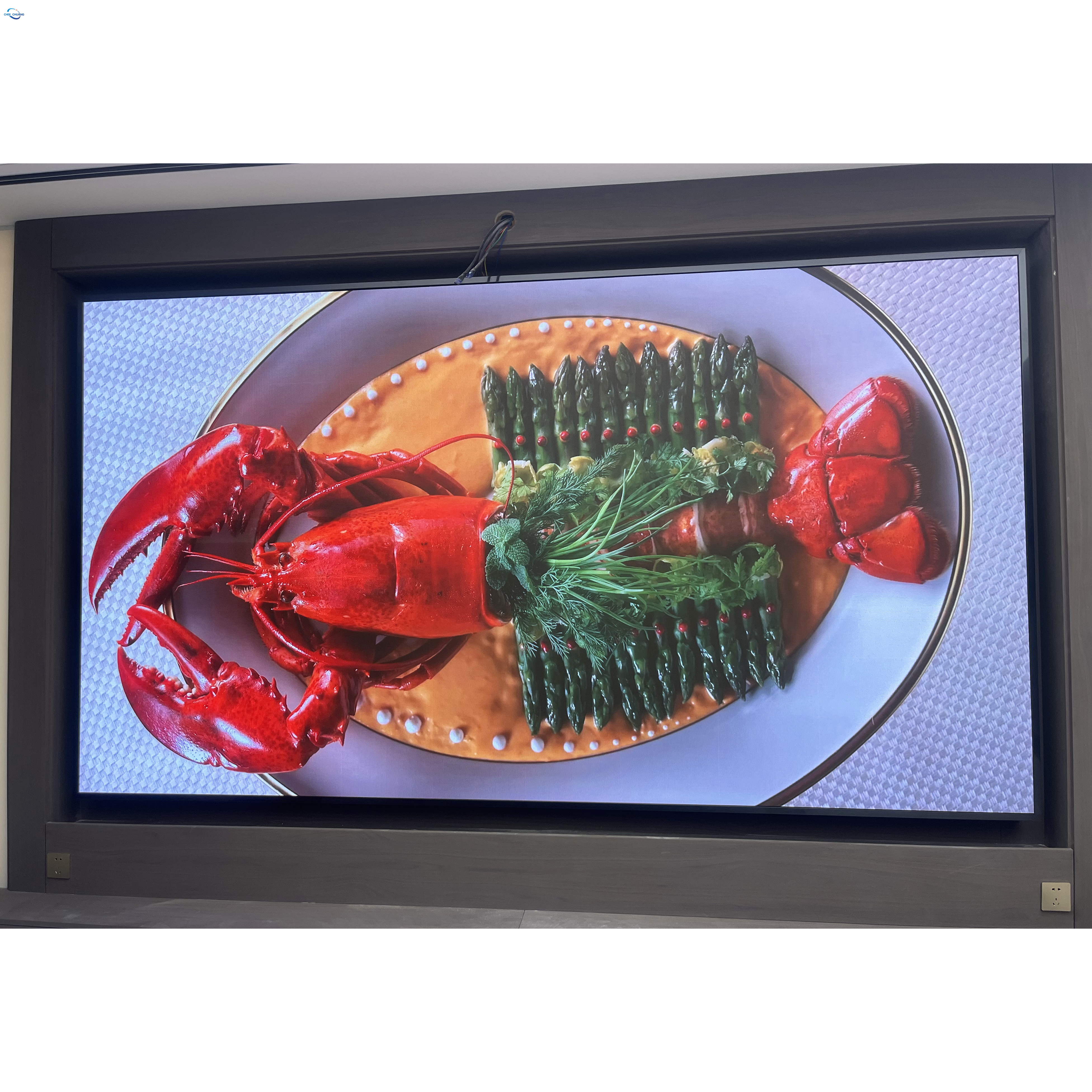
The bezel-less nature of direct-view display technology changes the commercial game entirely. Traditional LCD video walls constantly suffer from grid-line disruptions. These thick black bezels physically break the visual illusion, distracting viewers from your core message. Seamless displays eliminate this irritating problem entirely. They interlock flawlessly to create genuinely unified visual canvases for your most important content. Data visualizations, broad landscapes, and typography read perfectly without structural interruptions.
Contrast and color volume dictate true image realism. Backlit LCDs fundamentally struggle to produce true black levels. They rely on global or local dimming zones that often create a halo effect around bright objects. A self-illuminating pixel structure operates very differently. Each individual diode emits its own light and turns off completely to render absolute deep blacks. You get superior contrast ratios and incredibly vibrant hues. This self-illuminating capability makes your content pop, capturing attention instantly.
Lifespan dictates the long-term value of your hardware. Commercial LED Screens boast an impressive 100,000-hour operational benchmark. Traditional LCD setups experience much faster brightness degradation over continuous use. Over five years, an LCD running continuously might lose half its peak luminance. Direct-view counterparts retain their structural brightness and color accuracy much longer. You secure a reliable, high-performance return through sustained daily operations.
Feature | Direct-View LED | Commercial LCD Video Wall |
|---|---|---|
Bezel Width | 0mm (Seamless) | 0.88mm to 3.5mm |
Peak Brightness | Up to 10,000 nits | 500 to 700 nits |
Lifespan Benchmark | 100,000 hours | 50,000 to 60,000 hours |
Contrast Ratio | Extremely High (Self-emitting) | Moderate (Backlit) |
Pixel pitch strictly dictates your necessary pixel density. We measure this critical P-value in millimeters. Investing in a highly dense P1.2 display is a massive waste of budget for a highway billboard. Viewers driving past cannot see that microscopic detail from 100 feet away. However, P1.2 is absolutely mandatory for an executive corporate boardroom where clients sit mere feet away. We use a highly pragmatic framework for this essential calculation.
Identify the minimum viewing distance between the screen and the closest audience member.
Convert that distance into meters to find your exact baseline P-value.
Adjust the pitch downward if you plan to display highly detailed text or intricate schematics.
Match the overall hardware resolution to your desired content format securely.
Pixel Pitch (P-Value) | Minimum Viewing Distance | Common Application Scenarios |
|---|---|---|
P1.2 to P1.5 | 1.2 to 1.5 meters | Corporate Boardrooms, Control Rooms |
P2.0 to P2.5 | 2.0 to 2.5 meters | Retail Flagships, Broadcast Studios |
P3.9 to P4.8 | 3.9 to 4.8 meters | Indoor Event Stages, Large Atriums |
P10.0+ | 10.0+ meters | Highway Billboards, Stadium Exteriors |
High refresh rates construct truly immersive environments. Broadcasters, esports arenas, and extended reality (XR) studios actively require 3840Hz or higher. Lower rates cause harsh visual tearing during high-speed video playback. Professional camera sensors easily pick up ugly flicker on lesser screens, ruining broadcasts. Wide viewing angles ensure everyone in the room sees perfectly uniform color. You prevent awkward color shifting for off-axis viewers sitting at the edge of the space.
Flexible modules enable incredibly curved and custom form factors. You can flawlessly wrap these thin displays around load-bearing architectural columns. We frequently see them forming 90-degree seamless corners in luxury retail flagships. These custom shapes build incredible 3D visual illusions. The highly popular naked-eye 3D effect relies entirely on precise, seamless corner construction. You transform standard flat walls into dynamic digital sculptures that stop foot traffic.
Passive screens no longer captivate modern, digitally native audiences. You must thoughtfully integrate advanced sensor technology into your hardware. Infrared sensors and external touch overlays add immediate, tactile interactivity. Motion tracking cameras allow users to control on-screen content through physical gestures alone. These tools successfully transform standard background displays into highly interactive brand touchpoints. Shoppers can manipulate 3D product models or navigate complex digital directories seamlessly.
Coupling high-end hardware with robust software is absolutely crucial. You need backend content agility to stay relevant in fast-paced markets. Cloud-based Content Management System (CMS) software provides this critical operational flexibility. It allows real-time, highly localized updates across multiple global geographic locations. You can seamlessly push a new promotional campaign to a hundred different screens instantly. This centralized control reduces labor costs and ensures strict brand consistency.
Interaction proves the return on your marketing investment. Integrated cameras and advanced software analytics silently capture essential operational data. You measure precise audience demographics automatically without invasive surveys. The software tracks average gaze duration and specific physical interaction rates. We consistently rely on this concrete data to refine digital messaging. You learn exactly what captures audience attention and what viewers actively ignore.
Large-scale video walls demand serious structural reinforcement before a single panel arrives. You must assess static weight loads carefully during the architectural planning phase. Assess the exact mounting depth available in your designated space. Commercial LED Screens carry significant physical weight across large surface areas. A licensed structural engineer should thoroughly evaluate the existing wall studs and foundational supports. Failing to prepare the physical environment often leads to disastrous structural failures.
High-brightness screens draw substantial electrical power. You must actively plan for robust, dedicated electrical infrastructure. Dedicated heavy-duty circuits prevent unexpected power trips during peak visual output. Heat dissipation requires highly careful HVAC load calculations. Overheating permanently damages delicate diodes and immediately voids expensive manufacturer warranties. We always recommend actively cooling enclosed installations to ensure maximum hardware longevity.
Public corridors require strict adherence to ADA compliance. Screens simply cannot protrude beyond specific legal limits if mounted at standard head height. You must navigate these public safety regulations closely to avoid costly fines. Commercial hardware also requires proper UL or CE safety certifications. Fire safety and strict electrical compliance remain non-negotiable for any legitimate corporate, transportation, or retail space.
Batch consistency effectively prevents disastrous, highly visible color mismatches. Vendors must explicitly supply your spare modules from the exact same diode manufacturing batch. Diodes fabricated from different manufacturing runs look noticeably different under normal power. You will end up with an ugly, patchwork appearance during future repairs. Always demand matched spare components in writing during the initial hardware purchase.
Service Level Agreements heavily dictate your long-term operational success. Demand a comprehensive, easily actionable commercial warranty. You deeply need guaranteed, rapid response times for unexpected critical failures. Clarify upfront if the vendor provides direct on-site repair or relies on a slow return-to-factory policy. Shipping large cabinets back to an overseas factory causes entirely unacceptable operational downtime.
Never sign off on a major purchase without a formal Proof of Concept (PoC). Prudent buyers should always insist on a localized physical mock-up. Viewing a similar operational installation reveals subtle potential hardware issues. You can evaluate the true viewing angles, color saturation, and peak brightness in person. A successful PoC confidently confirms the proposed hardware actually meets your specific experiential goals.
Will you provide 5% spare parts strictly from the identical manufacturing batch?
Does your specific SLA guarantee a 24-hour on-site engineering response time?
Are your display cabinets fully front-serviceable to heavily simplify maintenance?
Can you provide localized client references from similar commercial deployments?
Generic displays are rapidly losing ground in competitive commercial spaces. Purpose-built LED architectures now thoroughly dominate the modern experiential landscape. These advanced systems offer unmatched peak brightness, seamless physical integration, and extreme long-term reliability. Successful deployment, however, absolutely requires rigorous pre-planning. You must prioritize analyzing the viewing environment and secure stringently negotiated vendor support. Careful technical specification effortlessly prevents costly, irreversible installation mistakes.
Start by thoroughly auditing your installation environment today. Measure your exact ambient light levels at different times of the day. Calculate the minimum viewing distance accurately to determine your ideal pixel pitch. Assess your facility’s structural load capacity and available electrical infrastructure. Gather this highly critical data before engaging hardware vendors for initial quotes. You will negotiate significantly better financial terms and ultimately secure a much more impactful visual experience.
A: A standard industry rule of thumb makes this easy. One millimeter of pixel pitch roughly translates to one meter of minimum optimal viewing distance. For example, a P2.5 screen is best viewed from 2.5 meters or further. Closer viewing requires a smaller pitch to avoid seeing individual pixels.
A: Peak power consumption can initially appear higher. However, modern LED Screens dynamically adjust their power draw based on actual content brightness. Darker scenes automatically use far less energy. This operational efficiency, combined with massive 100,000-hour longevity, often results in highly competitive long-term energy costs.
A: This depends entirely on the wall's underlying stud structure and the total combined weight of the cabinets. Standard drywall cannot support heavy video walls alone. A professional structural engineering assessment is a mandatory first step for any large-scale installation to ensure maximum safety.
A: You absolutely do not need to replace the entire display. The modular repair process is highly efficient. Technicians simply swap out the specific magnetic pixel card from the front of the screen. This easy maintenance takes only minutes and happens without dismantling the entire structure.