Upgrading commercial signage requires balancing visual impact and architectural integrity. Choosing the wrong display technology risks blocking natural light. It can also incur heavy structural modification costs or fail to capture passing foot traffic. Regular signage remains the industry standard for sheer brightness and resolution. However, the adoption of clear digital surfaces has forced businesses to re-evaluate how hardware interacts with physical environments. You must decide whether to enhance an existing space or completely mask it. This guide breaks down the technical capabilities and implementation realities of these commercial displays. You will learn how to select the exact hardware architecture your commercial space requires. We will explore ambient light integration, structural demands, and content strategy limits. By mapping these hardware differences, you can confidently upgrade your storefront or corporate facade.
Structural Load vs. Pixel Density: Traditional LED screens win on ultra-high-definition content but require robust load-bearing infrastructure. Transparent LED displays sacrifice some pixel density for a 50–70% reduction in weight.
Ambient Light Integration: Clear LED technology preserves natural storefront lighting (up to 85% transparency), whereas traditional cabinets create opaque walls that block both light and interior visibility.
Cost Realities: Transparent options often carry a higher upfront hardware cost but can drastically reduce installation, structural reinforcement, and cooling expenses.
Before reviewing technical specifications, you must define your core objective. Ask yourself what role the digital surface plays in your physical space. Are you trying to turn a window into a digital asset without blocking the view? Or do you need a dedicated, high-definition broadcast surface?
Traditional hardware acts as an opaque barrier. This design works best for creating immersive, high-contrast visual environments. When you build a solid digital wall, the screen itself becomes the destination. Retailers and event organizers use this approach when they want complete control over the visual narrative. The hardware blocks everything behind it, giving you a perfect canvas for rich media.
Conversely, the see-through asset approach prioritizes integration. Integrating a Transparent LED Display allows you to maintain architectural aesthetics. These units allow two-way visibility, which is crucial for modern retail facades and corporate lobbies. You can display dynamic promotions to the street while keeping your interior visible and well-lit. Shoppers outside can still see your physical merchandise. Employees inside retain their natural daylight.
To clarify these differences, review the baseline architectural impacts:
Site Alteration: Solid units often require removing windows or building false walls.
Lighting Impact: Solid displays block external light, requiring increased interior artificial lighting.
Customer Experience: Clear screens invite customers to look through the glass into the store.
Aesthetic Footprint: Clear units blend into existing glass structures invisibly when turned off.
Choosing between these two technologies requires a strict technical audit. You must evaluate how each option handles light, heat, and resolution limits.
Technical Specification | Opaque Barrier Display | See-Through Display Asset |
|---|---|---|
Standard Transparency | 0% (Completely Solid) | 65% - 85% |
Common Pixel Pitch | 0.9mm to 10mm | 3.9mm to 16mm+ |
Cabinet Weight | 30kg to 50kg+ per sqm | 10kg to 15kg per sqm |
Thermal Management | Active (HVAC / internal fans) | Passive (Natural convection) |
Solid cabinets offer superior contrast ratios. They produce deep blacks because they use a solid, dark background behind the diodes. This design easily outperforms clear units in direct sunlight if nit levels are equal. When you install an opaque screen outdoors, the dark mask absorbs ambient light. This absorption boosts visual pop and color saturation.
Clear models operate differently. They require exceptionally high brightness, often exceeding 5000 nits, to combat daytime glare. Because they lack a dark backing, contrast relies entirely on interior lighting conditions. If you install a clear screen against a brightly lit store interior, the imagery might wash out. To maximize contrast on a clear display, you must keep the space immediately behind the screen slightly dimmed.
Structural demands often dictate which technology you can adopt. Traditional enclosed cabinets are heavy. They pack power supplies, receiver cards, and cooling fans into solid metal boxes. Installing these units often requires custom steel support frames. Furthermore, because the solid boxes trap heat, you usually need dedicated HVAC systems to prevent overheating.
Clear alternatives use lightweight aluminum or polycarbonate frames. By stripping away the back panel, manufacturers reduce the weight by up to 70%. The louvered design also allows natural air circulation. Heat dissipates passively through the gaps between the light bars. This passive cooling eliminates the need for bulky air conditioning units, simplifying the entire integration process.
Hardware dictates what content you can effectively show. Opaque cabinets are ideal for full-screen video, intricate text, and 4K broadcast content. Because the diodes sit closely together, standard pixel pitches routinely drop below 1mm. You can display complex spreadsheets, dense typography, and cinematic video seamlessly.
Clear hardware serves a different content strategy. It is best suited for 3D animations, high-contrast motion graphics, and holographic effects. We do not recommend using clear displays for detailed text or spreadsheet-style data. The wider pixel pitch limitations (usually starting around 3.9mm) make small text illegible. To succeed with clear screens, designers must use stark black backgrounds in their video files. The hardware reads the color black as "off," leaving those areas fully transparent.
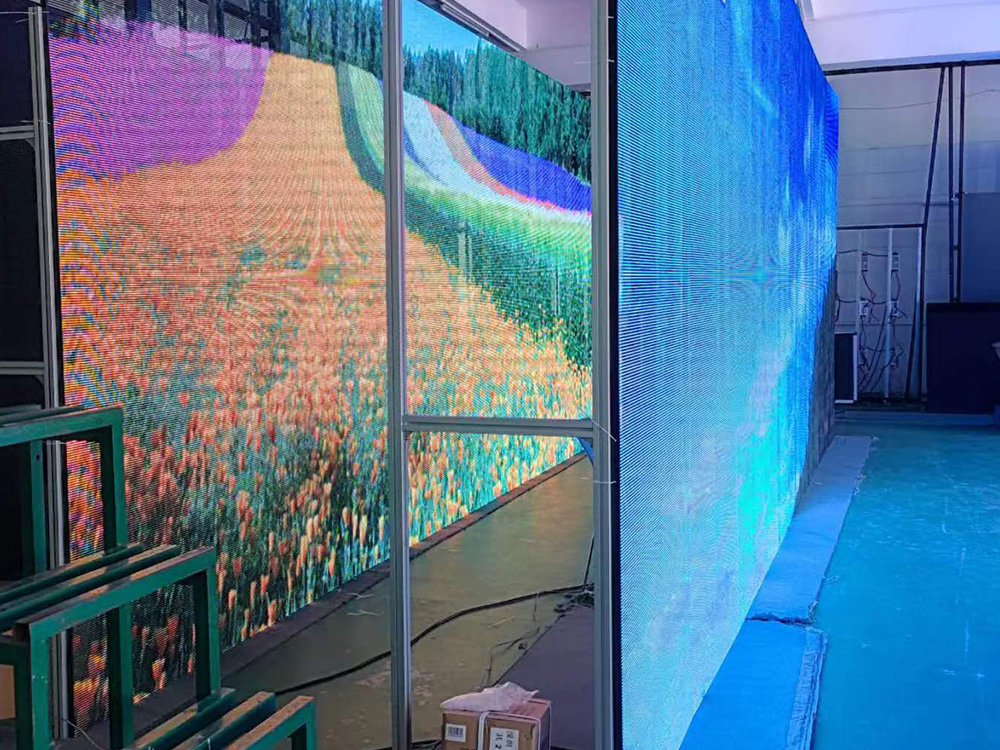
Hardware specifications only matter when applied to real-world environments. Different industries face unique spatial and regulatory challenges. Matching the right display to the right sector prevents costly retrofitting later.
For high-street retail, clear technology is the undeniable winner. Storefronts rely on window shopping to drive impulse visits. Landlords and city planners also enforce strict rules about blocking street-facing windows. Turning existing glass facades into dynamic ads prevents you from violating lease agreements regarding window blockage.
This hardware draws foot traffic while letting shoppers see inside. A fashion retailer can display a floating 3D logo or a catwalk video. Meanwhile, pedestrians can still look past the digital content to view the physical mannequins. You retain the psychological advantage of an open, inviting store interior.
When broadcasting over long distances, traditional solid cabinets win effortlessly. Highway billboards and stadium displays demand maximum visibility from hundreds of feet away. Traditional LED Screens offer weatherproof reliability through fully sealed IP65-rated enclosures.
For massive deployments, solid cabinets provide unmatched structural integrity against wind loads and harsh weather. They also handle direct, sustained sunlight better due to their high-contrast front masks. If your sole objective is delivering an unmistakable, high-definition message to drivers or crowds, opaque screens are the standard.
Corporate environments and temporary exhibitions require a situational approach. Your choice depends entirely on the spatial design. Clear displays excel in modern, glass-heavy architectures. You can suspend them from ceilings to create floating visuals above a reception desk. They feel lightweight and futuristic, enhancing premium brand identities.
However, traditional screens work better for detailed presentation backdrops. If a corporate lobby frequently hosts town hall meetings requiring data charts, a solid screen is mandatory. Evaluate the primary function of the room. Choose clear hardware for ambient branding and solid hardware for direct communication.
Adopting digital signage involves more than just plugging in a screen. You must navigate physical environment challenges, local regulations, and long-term durability concerns.
Zoning Laws & Permitting Restrictions: Many municipalities heavily restrict opaque digital signs covering windows. City planners often categorize solid window screens as structural modifications. Clear displays often bypass these specific architectural restrictions. Because they qualify as "see-through," local permitting offices frequently classify them differently. You must always verify local compliance before purchasing hardware.
The "Messy Interior" Risk: Clear displays work both ways. Shoppers can see through the screen into your facility. If the interior of your store is cluttered, poorly lit, or undergoing renovations, the screen will highlight that mess during daylight hours. You must curate the physical space directly behind the glass.
Daylight Balancing Challenges: Ambient sunlight changes throughout the day. A screen facing east will look vastly different at sunrise compared to noon. You must install automatic brightness sensors. These sensors adjust the diodes dynamically to prevent blinding pedestrians at night while remaining visible during the day.
Durability in High-Touch Areas: Clear displays often have exposed components. The individual light bars are vulnerable to physical damage. If you install them at ground level without protective acrylic or glass layers, passing objects can snap the diodes. You must position them safely behind existing storefront glass or install custom protective shields.
To finalize your hardware strategy, you need a pragmatic checklist. Review your site conditions against these operational triggers.
Choose a transparent display if:
You are installing the system directly behind an existing structural glass facade.
Preserving interior natural daylight for employees and customers is a strict requirement.
The building's structural load capacity cannot support heavy steel framing.
Your content relies on artistic branding, floating graphics, and bold colors.
Choose a traditional solid screen if:
Your content strategy relies heavily on high-resolution video, fine text, and data.
You are building an outdoor, standalone billboard exposed to harsh weather.
You need maximum contrast in an environment you fully control, like a theater or auditorium.
You plan to use the screen as a physical wall to divide a large room.
Actionable Next Step: Conduct a comprehensive site survey. Do not order hardware based on dimensions alone. Focus on window measurements and structural load limits. Assess ambient light exposure by determining if the installation faces North or South. Direct Southern exposure requires significantly higher brightness ratings. Document these environmental factors before requesting vendor quotes to ensure accurate hardware matching.
The choice between clear digital surfaces and regular opaque signage is rarely just a basic preference. It is an architectural and content-driven decision. Solid hardware delivers unmatched visual density and contrast, making it perfect for dedicated viewing environments. Clear hardware revolutionizes how we utilize existing glass, turning empty windows into dynamic media assets without isolating the interior.
Audit your installation environment first. Look at the structural beams, the natural lighting, and the pedestrian flow. If the screen must integrate into your building's existing footprint without disrupting it, go transparent. If the screen is meant to dominate and replace the physical environment entirely, go traditional. Match the technology to your spatial reality to ensure a successful deployment.
A: Yes, provided they have a brightness rating of at least 5,000 to 7,000 nits. This high brightness allows the diodes to compete directly with harsh sunlight. Without sufficient nits, daytime glare will wash out the floating imagery.
A: Yes, you can play standard video files. However, videos with black backgrounds work best. The system interprets black pixels as "off," leaving those specific areas unlit. This creates the highly desired see-through holographic effect.
A: Generally, yes. Traditional outdoor cabinets feature IP65+ ratings with heavily sealed components. They resist rain, dust, and wind impact easily. Clear screens are typically installed safely behind structural glass to protect them, though specialized outdoor-rated clear options do exist.
A: Solid screens can achieve extremely tight pixel pitches, often dropping below 1mm for flawless close-up viewing. Clear screens require gaps between the diodes to allow light through, so their pixel pitches generally start around 3.9mm and go wider.
A: No. Because they lack a solid back panel, clear screens utilize natural air convection. Heat escapes passively between the louvered light bars, completely eliminating the need for dedicated HVAC systems usually required by solid display cabinets.