Transforming a building's facade into a premium media asset requires more than standard flat digital billboards. Architectural integration demands absolute precision. For architects, real estate developers, and media buyers, evaluating an outdoor display for a curved surface introduces complex structural, thermal, and visual challenges. You must balance seamless visual performance against rigorous weatherproofing and structural compliance. Maximizing the return on investment of facade advertising requires careful planning. This guide outlines the exact technical criteria and implementation risks you must evaluate before procurement. We will explore structural load constraints and weather resistance frameworks. You will learn how to choose between flexible modules and custom-angled rigid cabinets. We also cover maintenance access realities for solid building facades. Finally, we provide actionable advice on vetting manufacturing partners. Proper evaluation ensures long-term visual dominance and strict adherence to local building codes.
Curved architectural applications require a choice between flexible LED modules (for tight, seamless radii) and custom-angled rigid cabinets (for maximum durability).
High-yield premium advertising demands ≥7,000 nits brightness combined with smart thermal management to prevent diode degradation.
Selecting an OEM outdoor led display partner should be based on structural engineering support and transparent warranty terms, not just unit cost.
Brands spend millions securing prime digital real estate. They expect flawless visual execution. Slapping standard flat panels onto a rounded building creates a severe polygonal aesthetic. We call this the jagged edge effect. It distorts high-resolution video content heavily. It degrades the perceived value of your premium advertising inventory.
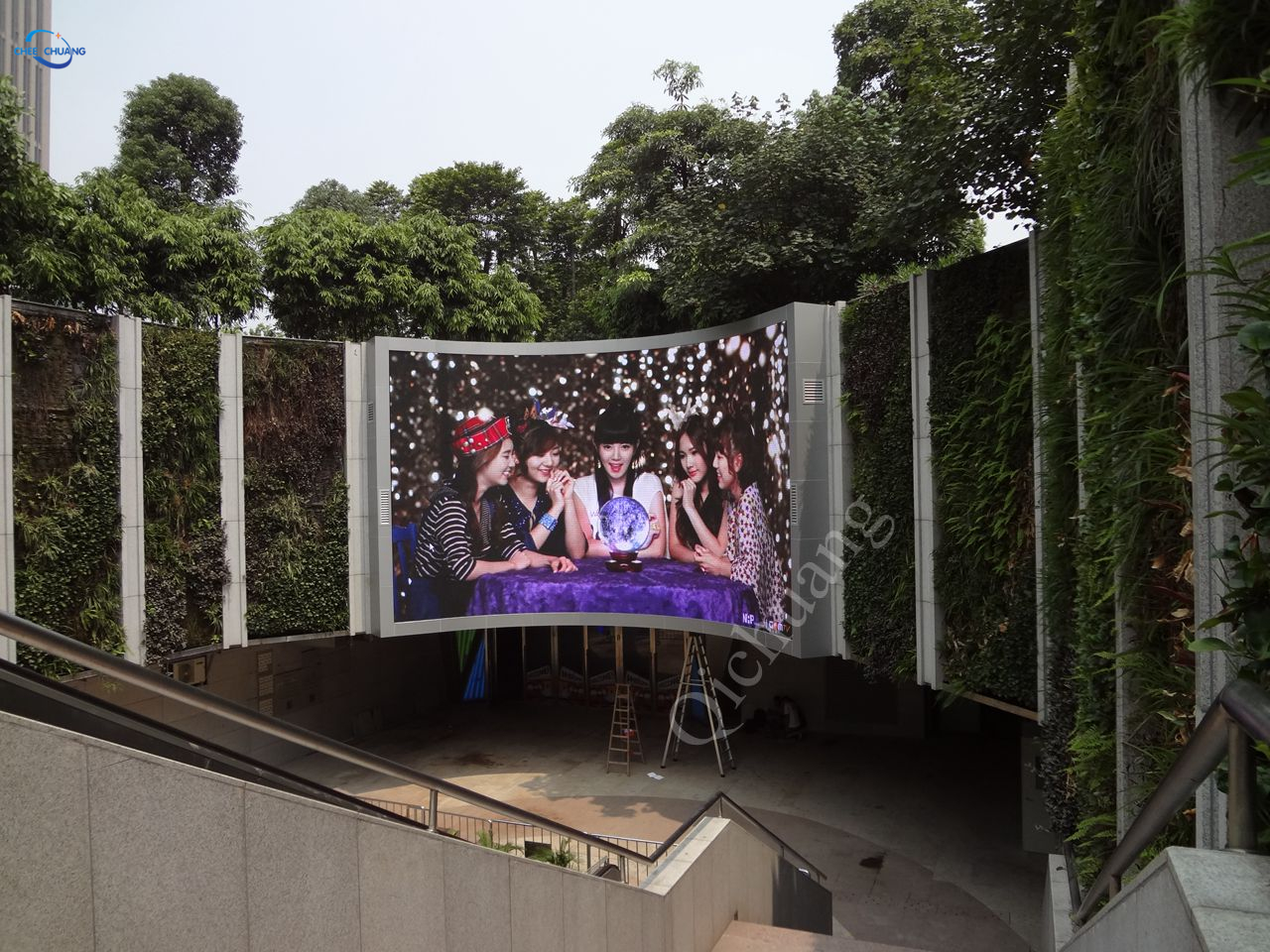
A successful media facade must align perfectly with the building's organic contours. This flawless alignment expands the viable viewing angle up to 160 degrees. Viewers from multiple street intersections can see the screen simultaneously. A purpose-built curve led display achieves this panoramic visibility. It maintains essential structural integrity while hugging the architecture.
Architects despise retrofitted screens. They want digital elements to feel native to the building structure. Purpose-built curved displays achieve this architectural harmony effortlessly. They flow naturally along the exterior lines. This seamless integration elevates the entire property value. It transforms a standard commercial building into a landmark digital destination.
The return on investment heavily favors curved integrations. Seamless curves capture pedestrian traffic and vehicular traffic from various angles. This expanded sightline justifies much higher ad placement rates compared to standard flat screens. Advertisers pay more for dominant, multi-directional exposure. You maximize revenue by offering a wrap-around digital canvas.
Architects face a critical choice when specifying an outdoor advertising screen. You must select the underlying curving mechanism. This choice dictates both visual smoothness and long-term hardware durability.
Mechanism: Manufacturers build these modules using pliable PCB masks. They house the electronics in bendable, rubberized casings. This allows the module to bend seamlessly around tight structural columns. It easily conforms to deep architectural waves.
Pros: Flexible modules deliver true, continuous curves. You see zero visible segmenting. They adapt effortlessly to highly unusual architectural shapes. They offer unmatched aesthetic perfection for intricate facades.
Cons & Risks: They remain historically more susceptible to extreme weather conditions. Intense UV exposure can degrade rubberized components over time. You must install rigorous secondary waterproofing layers behind the display framework. Moisture ingress is a persistent risk.
When evaluating flexible options, pay close attention to the silicone compounds used. Low-quality plastics become brittle under continuous freezing and thawing cycles. You must inspect the manufacturer's weathering test data. Do they use automotive-grade UV inhibitors in their mask plastics? These small material details determine whether your screen survives five years or fails quickly.
Mechanism: This approach utilizes standard rigid aluminum or magnesium cabinets. Engineers design specific degree-angled edges on each cabinet. They might cut a 5° or 10° bevel into the metal frame. Connecting these beveled edges forms a faceted, sweeping curve.
Pros: Rigid cabinets are exceptionally durable. They easily integrate standard heavy-duty display technology. The solid metal chassis provides superior heat dissipation. This extends the lifespan of the internal electronics.
Cons & Risks: Rigid cabinets create a faceted look on very tight radii. Up close, viewers might notice slight polygonal edges. This method requires incredibly precise structural calculations. Poor engineering leads to visible, ugly gaps between the metal cabinets.
The beveling process requires extreme precision machining. Engineers use CNC machines to cut the aluminum chassis. A tolerance error of even one millimeter multiplies across fifty cabinets. This error creates massive gaps in the final installation. You must demand CNC-machined cabinets over cheaper cast-iron alternatives.
Curved Hardware Form Factor Comparison
| Feature | Flexible Soft Modules | Custom-Beveled Rigid Cabinets |
|---|---|---|
| Visual Smoothness | Perfect continuous curve | Slightly faceted on tight radii |
| Durability Level | Moderate (vulnerable to UV/moisture) | Extremely high (metal chassis) |
| Minimum Radius | As small as 1 meter | Generally 3 meters or larger |
| Heat Dissipation | Average (rubber retains heat) | Excellent (die-cast aluminum) |
Evaluating a weatherproof led panel requires looking past basic marketing spec sheets. Facades endure brutal environmental punishment daily.
Brightness is non-negotiable for premium advertising. You must establish a minimum baseline of 7,000 to 10,000 nits. This high output is mandatory for south-facing or highly exposed facades. Insufficient brightness creates washed-out, invisible images during peak daylight. You must also demand high contrast ratios. Specify dark, anti-UV mask designs over the diodes. These masks prevent the sun from bleaching the screen's color saturation.
Do not accept standard IP65 ratings blindly. Look for IP65/IP65 (front/rear) as an absolute minimum baseline. Better yet, demand IP68 ratings for fully sealed modules in harsh climates. If your building sits in a coastal city, evaluate salt-fog resistance. Salt air quickly corrodes internal wiring. You must also secure official wind-load certifications. Curved surfaces catch wind differently than flat walls. Aerodynamic shear forces can rip poorly secured modules from their mounts.
Heat destroys delicate LED electronics. You must assess the internal heat dissipation methods. Choose a die-cast aluminum chassis over traditional steel framing. Aluminum pulls heat away from the diodes rapidly.
Specify energy-efficient common cathode technology. Traditional common anode technology pushes a single high voltage across all color chips. This wastes massive amounts of energy as heat. Common cathode technology separates the power delivery. It sends precisely the right voltage to the red chip, and a slightly higher voltage to the blue and green chips. This smart routing drops power consumption significantly. Less power means less heat. Less heat means longer-lasting diodes. Finally, verify the inclusion of specialized fire-retardant materials. Ensure strict UL or CE compliance to pass local fire marshal inspections.
Deploying a massive outdoor led display introduces serious engineering hurdles. You cannot treat a facade screen like a standard roadside billboard.
Large-scale curved displays add immense weight to a building's exterior. The steel sub-frame design must account for multiple stress factors. It carries the dead weight of the display modules. It supports the secondary mounting structure. It also absorbs dynamic wind loads pushing against the curvature.
A proper structural audit involves more than checking the wall material. Engineers must assess the building's skeletal steel. They calculate the pull-out strength of the concrete anchors. They model how wind vortexes wrap around the curved facade. Wind hitting a curved surface accelerates along the edges. This creates intense suction forces. Your mounting frame must withstand these specific aerodynamic pressures.
Actionable Advice: Always mandate a comprehensive structural audit of the building facade. Hire independent engineers to verify weight limits before you finalize any screen dimensions.
Facade mounting rarely leaves room for rear-access catwalks. Building owners do not want technicians inside their walls. Therefore, you must ensure the display features true front-serviceability.
Technicians must be able to replace components externally. Power supplies, receiving cards, and LED modules should unlock from the front face. This capability eliminates the need to dismantle the heavy structural frame during routine repairs.
Local zoning laws strictly govern digital signage. Municipalities frequently dictate maximum brightness limits during nighttime hours. Your system must include automated ambient light sensors. These sensors detect sunset and scale down brightness in real-time. This dynamic adjustment prevents heavy regulatory fines. It also stops neighborhood light pollution complaints.
Procuring the hardware is a major capital expense. Choosing the right OEM outdoor led display partner dictates your long-term success.
Ask specific questions about their engineering flexibility. Can the manufacturer design custom-angled cabinets specifically for your building's unique radius? Many vendors push standard, off-the-shelf angles to save money. These generic angles rarely fit complex architectural curves perfectly. You need a partner capable of bespoke sheet metal fabrication.
Tour their R&D facility virtually or in person. Look for dedicated environmental testing chambers. Do they run their cabinets through salt-spray simulations? Do they use vibration tables to simulate transport and wind shear? A reliable vendor tests their hardware to the point of destruction. This destructive testing guarantees the product will survive on your building.
Do not accept theoretical lifespan claims. You must request specific, verifiable case studies. Ask to see curved facade installations they completed three to five years ago. Verify these screens operate in climates similar to yours. You need hard proof of long-term mechanical stability and diode endurance.
LED diodes degrade naturally over time. When you replace a module three years later, you risk color mismatch. A brighter, newer module creates an ugly checkerboard effect against the older screen.
Ensure the OEM guarantees that all spare replacement modules come from the exact same LED diode batch. Secure transparent, written warranty terms regarding this batch consistency. Store these specific spare modules in a climate-controlled room on-site.
Investing in a curved facade screen remains a high-stakes infrastructure project. Your ultimate success relies on choosing the correct curving method. You must carefully weigh flexible soft modules against rigid custom-beveled cabinets. You must verify extreme weather durability beyond basic IP ratings. You also must plan strictly for front-access maintenance constraints.
Follow these exact next steps before requesting financial quotes:
Secure the exact architectural blueprints detailing the facade's radius.
Identify the precise weight-bearing limits of the exterior wall.
Engage specialized structural engineers alongside your chosen display vendor.
Audit the local zoning laws for nighttime brightness limits.
Demand a pilot test of the custom-beveled angle before mass production begins.
A: The minimum radius depends heavily on the hardware type. Rigid custom-beveled cabinets are usually limited to larger, sweeping curves. Flexible soft LED modules utilize pliable masks and rubberized housings. They can seamlessly wrap around tight architectural pillars with a radius as small as one meter. Your choice depends entirely on the building's specific architectural contours.
A: The physical curvature itself does not increase electrical power draw. However, the high-brightness diodes required for multi-angle outdoor visibility consume significant energy. You should mandate common-cathode technology. This energy-saving architecture routes power efficiently, reducing both overall energy consumption and harmful internal heat generation.
A: Practically, no. You cannot safely bend or force a flat screen into a curve. The structural sub-frame, the metal cabinet chassis, and often the LED modules themselves must be purpose-built. They must match the specific curvature precisely to ensure a seamless image and guarantee structural safety against heavy wind loads.