In street-level digital Out-of-Home Advertising, a screen's commercial value strictly relies on its optical performance under dynamic environmental conditions. Visual impact drives viewer engagement. A high-quality installation ensures your core message stands out against chaotic urban backgrounds. Specifying outdoor display hardware requires navigating the tension between upfront hardware costs and the baseline performance required to capture pedestrian and vehicular attention. Over-speccing wastes capital prematurely. Conversely, under-speccing results in washed-out visuals and lost ad revenue. Finding the precise balance protects your investment entirely. This guide breaks down the critical relationship between pixel pitch, brightness levels, and overall campaign return on investment. You will learn how to build a verifiable evaluation framework for your next installation. We want to help buyers secure optimal screen legibility in every environment.
Viewing distance dictates pixel pitch: The minimum optimal viewing distance (in meters) roughly aligns with the pixel pitch (in millimeters).
Sunlight demands strict brightness baselines: True daylight visibility requires a minimum of 5,500 to 7,000+ nits, supported by auto-dimming sensors to ensure compliance and energy efficiency.
Compliance is a hidden dealbreaker: Local municipality regulations regarding light pollution often dictate maximum allowable nighttime brightness for street advertising displays.
Translating foot traffic or moving vehicles into measurable visual impressions requires guaranteed screen legibility. The physical environment heavily shapes how audiences interact visually. Hardware must constantly overcome unpredictable ambient light changes. Panels must also maintain clarity from extreme viewing angles. We must establish a strict performance baseline before selecting any individual components.
Identifying the core audience dictates your technical specifications early on. Fast-moving vehicles demand large text and rapid recognition. Highway drivers have only seconds to process an image. Slow-moving pedestrian traffic allows for high-detail imagery. Dwell times increase significantly near crosswalks and storefronts. Shoppers absorb complex brand messages better when walking slowly. You must categorize these traffic types early in the planning phase.
Common Mistake: Treating vehicle traffic and pedestrian traffic as identical audiences. A screen calibrated solely for fast readability often lacks the nuance required for slow-moving plaza shoppers.
Achieving true commercial viability relies on three definitive success metrics:
Clear visibility from the furthest target sightline ensures maximum audience reach.
Zero visual washout during peak solar hours maintains ongoing ad effectiveness.
Consistent color uniformity across the entire viewing angle prevents off-axis image distortion.
Meeting these benchmarks ensures viewers see content exactly as creators intended. Any compromise here directly reduces audience engagement rates. Advertisers demand pristine visual delivery.
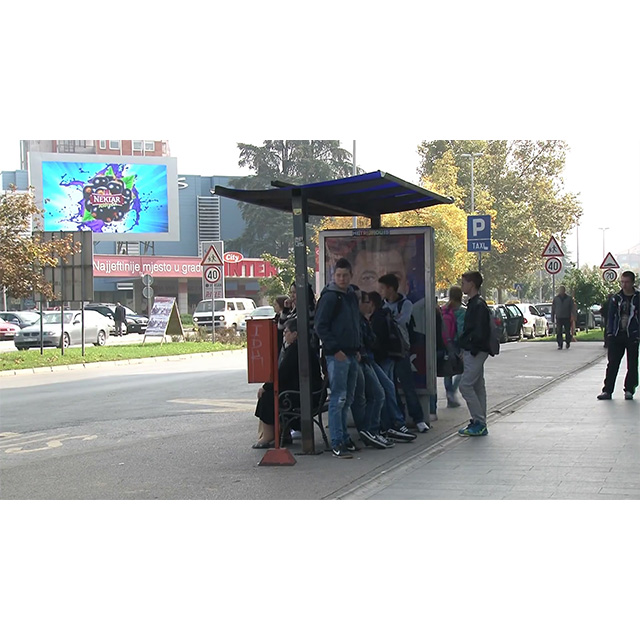
Understanding pixel pitch forms the technical framework of any installation. Pixel pitch simply means the physical distance between individual LED clusters. We measure this distance in millimeters. A smaller number indicates tightly packed pixels. Tighter spacing creates higher image resolution. It also increases manufacturing costs significantly. You must align this metric closely against audience positioning to avoid overspending.
Industry experts rely on a standard viewing distance formula. The "1 mm pitch = 1 meter viewing distance" rule defines acceptable viewing. A P5 screen looks cohesive from five meters away. For retina-level clarity, professionals use the "1 mm = 0.5 meter" rule. This stricter formula ensures no individual pixels remain visible to the naked eye. Calculating these exact distances prevents wasting budget on unnecessary resolution.
Best Practice: Always physically measure the closest possible point a viewer can stand. Do not rely on architectural blueprints alone. Temporary barriers or street furniture often alter natural walkways.
Pedestrian areas demand specific hardware choices. For close-proximity environments, P3 to P4 panels work best. Plaza settings often place viewers three to ten meters from the screen. These tight distances make fine detail necessary for high-end brand campaigns. Shoppers appreciate the sharp imagery. Premium brands refuse to display content on pixelated screens.
Standard urban routes require a different approach entirely. P5 to P6 panels serve mid-range viewing perfectly. These screens target viewers five to fifteen meters away. They offer a strong balance between resolution and cost-efficiency. This precise sweet spot dominates the modern Street landscape today. The visual fidelity meets advertiser expectations without breaking hardware budgets.
Elevated highway billboards follow distinct rules. Installers typically specify P8 to P10+ for these massive structures. These wide pitches prove highly cost-effective for long-distance viewing. Drivers fifty meters away cannot perceive ultra-fine details anyway. Tight pixel pitches offer zero visual benefit here. Upgrading a highway billboard to P4 wastes massive capital.
Luminance determines whether your content survives harsh daylight. We measure this output in nits (cd/m²). Nits serve as the standard unit of luminance for any screen. A higher nit value means a brighter, punchier picture. Brightness matters immensely for daytime advertising campaigns.
Standard indoor screens typically output 1,000 to 2,000 nits. This range fails completely outdoors. The sun easily washes out low-luminance panels. Shaded outdoor areas require an absolute minimum of 5,500 nits. Direct, unshaded sunlight exposure demands 7,000 to 10,000 nits. Falling below these strict thresholds wastes your advertising space entirely. Viewers simply see a dark, unreadable rectangle.
Manufacturers combine hardware and software solutions to combat solar glare. Integrated light sensors automatically adjust brightness based on ambient conditions. Hardware shaders, called louvers, sit just above individual LEDs. These small physical shelves block downward sunlight. High-contrast mask designs further absorb stray ambient light. Together, these technologies preserve deep black levels. Deep blacks make the actual colors pop aggressively.
Common Mistake: Relying on "peak brightness" numbers rather than "sustained brightness" metrics. Some panels hit 8,000 nits for a few minutes but throttle down due to rapid overheating. Always demand sustained performance reports.
Recommended Brightness (Nits) by Environment | ||
Installation Environment | Minimum Recommended Nits | Hardware Solution Add-ons |
|---|---|---|
Indoor / Window Facing | 2,500 - 3,500 nits | Auto-dimming sensors |
Outdoor (Shaded Area) | 5,500 - 6,000 nits | High-contrast masks |
Outdoor (Direct Sunlight) | 7,000 - 10,000+ nits | Physical louvers, premium diodes |
High performance introduces serious physical risks. Thermal management realities require careful planning. High brightness and tight pixel pitch generate significant heat. Trapped heat degrades electronic components quickly. Buyers must evaluate the trade-offs between various cooling methods. Fan-cooled cabinets handle extreme temperatures well but require regular filter maintenance. Fans also suck airborne dust into the cabinet. Aluminum die-cast fanless designs offer silent operation and better passive cooling. They use heavy heat sinks instead. They often feature higher initial costs but lower failure rates.
Weather mitigation remains a strict baseline requirement. Any exterior installation needs an IP65 rating for both front and rear sections. This rating ensures comprehensive protection against dust ingress. It also repels heavy rain and airborne street debris. Without proper sealing, moisture quickly shorts out internal receiving cards. Winter ice creates additional sealing challenges.
Best Practice: Schedule bi-annual maintenance checks for cabinet seals and cooling mechanisms. Intense UV exposure degrades waterproofing gaskets over time.
Regulatory and light pollution risks present massive hurdles. Navigating municipal zoning laws requires proactive planning. Cities actively enforce maximum nighttime luminance levels. An overly bright Outdoor LED Display creates dangerous glare for drivers. Implementing auto-dimming software prevents this hazard entirely. Smart dimming schedules help you avoid hefty municipal fines. Furthermore, running panels at lower nighttime capacities significantly extends the lifespan of the diodes.
Hardware decisions directly shape your financial outcomes. Pushing your specification from a P5 to a P3 doubles the total diode count per square meter. This upgrade drastically increases your initial capital expenditure. You must determine if a specific location justifies the premium. A high-end luxury retail district might demand P3. A standard traffic intersection likely only needs P5.
Operational expenditure requires equal attention during the planning phase. High brightness screens running at maximum capacity consume massive amounts of electricity. Monthly power bills quickly eat into advertising profits. Energy-efficient common-cathode technology reduces this ongoing burden. This specific circuit design lowers heat output and cuts lifetime power bills. It effectively routes precise voltage to red, green, and blue chips separately. Traditional designs push excess voltage, wasting it as heat.
Common Mistake: Buying the tightest pixel pitch available simply because the budget allows it. Excess resolution wastes money and increases ongoing energy costs without adding viewer value.
Revenue protection depends entirely on sustained hardware performance. A properly specced screen maintains its brightness over time. It preserves color uniformity across a five-to-seven-year lifecycle. Fading colors repel potential advertisers quickly. Consistent visual quality ensures your advertising slots remain premium-priced. High-quality internal components safeguard your ongoing revenue streams.
Choosing the correct LED Display demands rigorous technical vetting. A systematic approach prevents costly installation mistakes. Use the following structured steps to evaluate potential hardware partners effectively.
Audit the Installation Environment: Measure the exact minimum and maximum viewing distances. Map out pedestrian walkways and vehicle traffic lanes. Note the physical orientation of the screen relative to the sun's path across the sky.
Request Verifiable Data: Ask integrators for independent laboratory testing reports. Look for sustained nit levels rather than peak bursts. Check contrast ratios and power draw under maximum load conditions.
Assess the Software Ecosystem: Ensure your content management system natively supports real-time hardware monitoring. You need instant mobile alerts for temperature spikes. The system must also track dead pixels and current brightness states.
Testing sample panels on-site often reveals hidden manufacturing flaws. Always view sample cabinets under direct midday sunlight before finalizing any contract. Check the panels from extreme left and right angles to verify mask quality.
Selecting the right outdoor display requires abandoning "higher is always better" thinking. A successful deployment relies on an environment-specific, data-backed assessment. Viewing distances strictly dictate your resolution limits. Solar exposure mandates your brightness minimums. Proper thermal planning protects the internal electronics over the long term.
Map your specific sightlines accurately before soliciting hardware quotes. Identify where your primary audience walks or drives daily. Understand how the sun hits your building facade throughout the afternoon. We encourage buyers to request a technical consultation early in the process. Experts can calculate the exact pixel pitch and luminance required for your specific location. Taking these structured steps guarantees a high-performing asset that maximizes your advertising revenue.
A: Generally, experts recommend P4 or P5 hardware for urban routes. The final choice depends entirely on how close pedestrians can walk to the installation base. If foot traffic passes within three meters, P3 offers better clarity. P5 works perfectly for standard crosswalk distances.
A: Only if the display sits under a large overhang or faces away from the direct afternoon sun. Shaded areas handle 5,000 nits well. However, direct sunlight requires 7,000+ nits to prevent image washout and maintain sharp contrast during peak solar hours.
A: Tighter pixel pitches pack significantly more LED diodes per square meter. Driving these extra pixels requires more electricity. This dense configuration generally leads to higher power consumption and greater thermal management needs. You must account for these increased electrical loads during site planning.
A: This issue usually stems from a lack of ambient light sensors or improperly calibrated software. Displays must automatically scale down from daytime peaks of 7,000 nits to roughly 1,000-1,500 nits at night. Dimming ensures legal compliance, prevents dangerous driver glare, and saves energy.